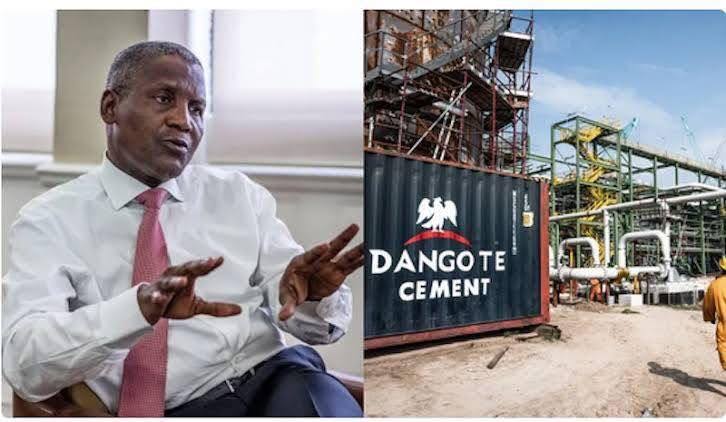
Nigerian billionaire industrialist, Aliko Dangote, has blamed the high cost of locally produced cement on Nigeria’s heavy tax regime and regulatory burdens, saying domestic consumers ultimately bear the brunt.
Dangote made the disclosure during an exclusive interview with Business Insider Africa, amid growing public concern over why cement produced in Nigeria is often cheaper when exported than when sold locally.
According to him, the price disparity is largely due to the multiple taxes and levies imposed on cement sold within Nigeria, which do not apply to exports.
Dangote explained that cement exported from Nigeria enjoys significant fiscal exemptions, making it cheaper and more competitive in international markets compared to what Nigerians pay at home.
“When you look at my invoice, the cement I export is cheaper than the one I’m selling domestically, because that’s how exports work.
“In export I’m saving a lot of money, I’m not paying 30% income tax, I’m not paying 2% education, I’m not paying 1% health, I’m not paying 7.5% VAT, and I’m not paying 10% withholding tax,” he said.
He noted that these tax exemptions allow Nigerian cement to compete favourably with products from countries such as Turkey, Russia and China.
Dangote stressed that the downside of this structure is that domestic buyers are forced to shoulder the cost of Nigeria’s structural inefficiencies.
He further added that local manufacturing alone is not enough to bring down prices, insisting that without reforms to taxation and regulation, Nigerians will continue to pay more for locally produced goods.