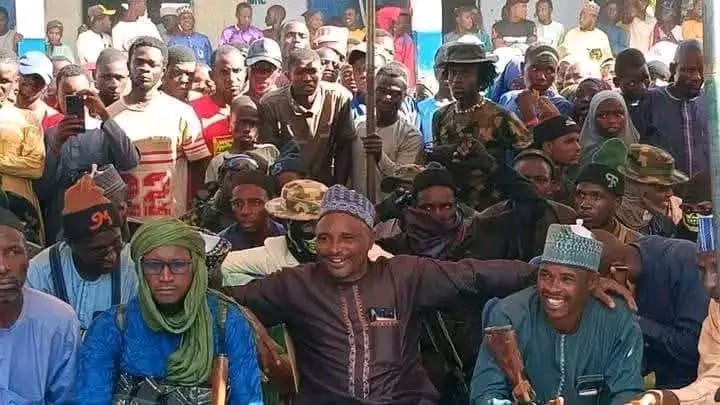
Katsina State has been rocked with fresh security controversy following plans by the government to facilitate the release of 70 suspected bandits, a decision officials insist is paying off through mass hostage releases and restored peace across terror-hit communities.
The backlash erupted after a classified government document detailing the plan was leaked, sparking fury among lawyers, civil society groups and citizens who fear the move could undermine justice and embolden criminals.
But speaking in an interview with DCL Hausa, the Commissioner for Internal Security and Home Affairs, Nasir Muazu, stood his ground, describing the decision as a critical part of community-driven peace deals with “repentant bandits” operating across several local government areas.
The leaked letter, dated January 2, 2026, and boldly marked ‘SECRET’, was reportedly addressed to the Chief Judge of Katsina State. It requested the intervention of the Administration of Criminal Justice Monitoring Committee (ACJMC) to facilitate the release of suspects already in custody.
Citing Section 371(2) of the Katsina State Administration of Criminal Justice Law, 2021, the document described the proposed releases as a key condition for sustaining peace accords reached between frontline LGAs and armed groups.
According to the document, while some suspects had been arraigned at the Federal High Court, others remain in detention awaiting trial at magistrate courts. An additional list of about 22 inmates facing high court proceedings was also reportedly submitted for consideration.
The revelation triggered outrage, with critics warning that freeing suspects accused of grave crimes could trample on the rule of law, deny justice to victims and send the wrong signal to criminal networks.
Muazu, however, said the critics were ignoring results already achieved on the ground.
He revealed that the peace initiative has led to the release of nearly 1,000 abducted persons across multiple LGAs, describing the outcome as a major breakthrough driven by negotiations involving local communities.
Drawing comparisons with post-war reconciliations, Muazu cited Nigeria’s civil war, Boko Haram negotiations and international peace processes as precedents.
“People know that normally, after a war, there are a lot of changes so people negotiate and agreed to release the people,” the commissioner said.
“‘If you can release our people, we too we will release yours’. It happens after wars. Even here in Nigeria during the civil war, a lot of people were released from both parties, and even Boko Haram members too were released. Even those Chibok girls that were released. So, wether it’s good or bad, it’s not new in the history of war and peace.
“Both kidnappers and Boko Haram members are doing the wrong thing. According to Nigerian law, it’s a crime. And here in Katsina, it’s both people and the bandits that negotiated and agreed we followed due process at least 15 steps before finalising.
“They agreed to release all the remaining people that they kidnapped. In Safana LGA, they already released 36 people, Kurmi 42, Sabuwa 310, Faskari 136, Dan Musa 60, Manunfashi 36, Musawa 28, Matazu 33, Dutsinma 62, Jibiya 31, and Bakori 125. It happened openly and was even posted on social media.
“And also both parties agreed that the bandits can now be going to markets, hospitals, and do what they want freely. The negotiation is between them and the people and they already released almost 1,000 people in Katsina state.
“They agreed to be in peace, I think what we should do now is to be prayerful for peace. Now Jibiya, Batsari, Safana, Dan Musa, Sabuwa, Faskari, Dan Dume, Bakori, Musawa, Matazu, Kurfi, Dutsinma, and other places are now in peace.
“What we should do is to thank God.”
Despite public outcry, the Katsina government insists the controversial strategy is restoring calm across vast swathes of the state, arguing that peace, not prolonged detention, remains the priority for communities long battered by bandit violence.