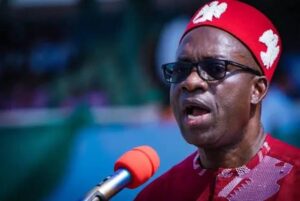
At defining moments in the history of a state, elections cease to be routine political exercises and become referendums on direction, identity, and collective ambition. Osun State appears to be approaching such a moment. The next governorship contest is not merely about party loyalty or campaign spectacle; it is about the quality of leadership that will represent Osun within Nigeria’s competitive federal landscape and shape its developmental route for the next decade.
In this unfolding conversation, the name Munirudeen Oyebamiji, popularly known as AMBO, has steadily emerged as a symbol of structured competence and administrative readiness. His supporters argue that Osun needs not just a popular figure, but a governor equipped with the technical capacity, fiscal literacy, and institutional discipline required to navigate modern governance.
Osun State operates within tight fiscal margins. Internally Generated Revenue remains modest relative to infrastructure demands, youth unemployment challenges, and the growing need for educational and healthcare reform. In such a context, governance cannot be improvised; it must be engineered. A state with limited resources requires a leader who understands budgeting cycles, debt management, investment signalling, and long-term planning. AMBO’s background in financial administration and public management is frequently cited as evidence that he understands the mechanics of governance beyond political optics.
Effective leadership today demands more than charisma. It requires systems thinking, the ability to align agriculture with agro-processing, education with employability, infrastructure with industrial clusters, and revenue expansion with fiscal prudence. Observers note that AMBO’s professional trajectory reflects exposure to structured financial management and policy coordination, attributes that could strengthen Osun’s capacity to move from project-based governance to program-based transformation.
Political organisation also plays a crucial role in governance effectiveness. The All Progressives Congress is characterised by layered institutional structures that extend from the ward level to the national executive. Such organisational coherence can facilitate smoother coordination between state and federal authorities, especially in areas like infrastructure financing, agricultural policy alignment, and youth enterprise development. In Nigeria’s federal system, where intergovernmental relationships often determine access to opportunities, party alignment and institutional depth may serve as strategic advantages.