By Kenneth Udeh, Abuja
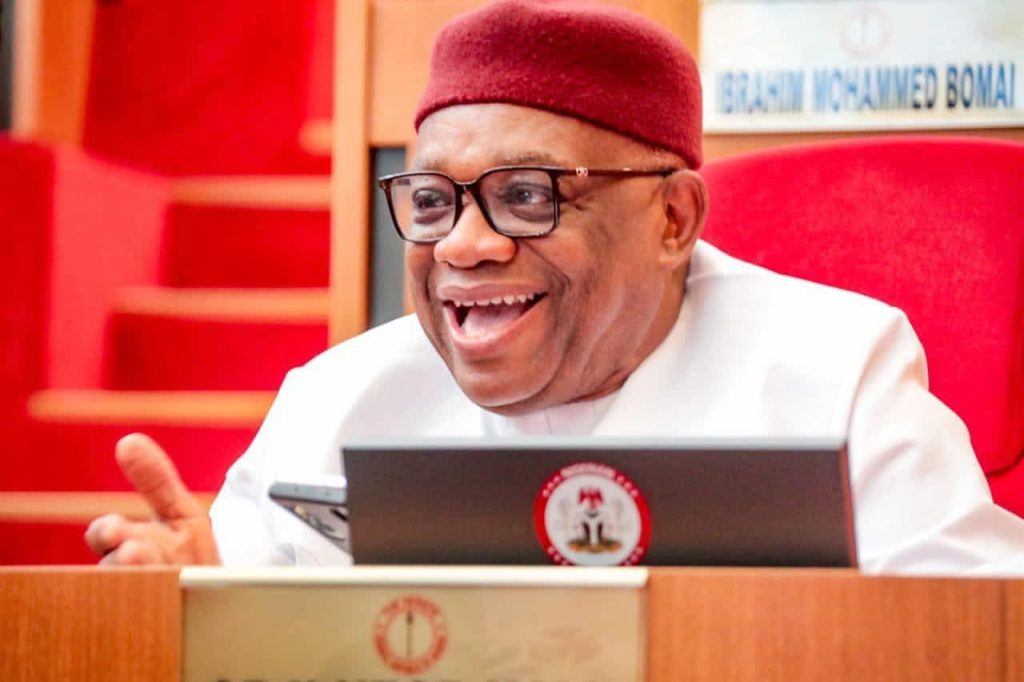
The Senate on Wednesday passed for second reading a landmark bill sponsored by Senator Orji Uzor Kalu (Abia North), seeking to establish a comprehensive Social Welfare Service aimed at reducing extreme poverty and ensuring that government social services reach only truly vulnerable Nigerians.
Leading the debate on the Social Welfare Service Bill, 2025, Senator Kalu said the proposal confronts one of Nigeria’s most enduring national challenges extreme poverty by creating a centralised, data-driven, and transparent structure for managing social protection programmes.
According to him, despite many years of various interventions, “millions of Nigerians still lack access to basic necessities.” He argued that the missing link has been an institution capable of coordinating welfare programmes nationwide in a structured and accountable manner.
Kalu stated that the Bill presents a New National Architecture for Social Protection;
“The Bill proposes the establishment of the Social Welfare Service as a department under the ministry responsible for humanitarian affairs, with branches in all 36 states and the FCT.
This nationwide reach, Kalu said, is designed to eliminate the over-centralisation of social programmes in Abuja and ensure direct impact at the community level.
The institution will design and implement welfare interventions such as: Food and cash transfers, Education stipends, Housing support Subsidies for marginal farmers, Credit schemes and Allowances for the elderly and persons with disabilities.
He further stressed that it will also develop strict targeting mechanisms to ensure that only genuinely vulnerable Nigerians benefit from these interventions.
A major innovation in the Bill according to the former Abia governor is the creation of Safety Centres across the federation, serving as data and operations hubs for identifying beneficiaries, delivering support, and monitoring results.
He said ; “The Service will maintain a register of beneficiaries and graduates to curb fraud and track long-term outcomes.
“The Bill outlines specific eligibility criteria including households earning below ₦5,000 monthly, day labourers earning below ₦3,000 per job, low-income artisans, subsistence farmers, and residents of slum communities.
Kalu emphasised that these criteria are designed to eliminate political influence, arbitrary selection, or multiple beneficiaries.
The Minister in charge will appoint a Coordinator with at least 15 years’ experience in social welfare and proven integrity, supported by officials from the ministry and the civil service.
Deputy Leader of the Senate Oyelola Ashiru ( Kwara South ) praised the proposal as “data-driven and timely,” noting that some Nigerians live on “pathetic statistics,” including families earning less than ₦5,000 monthly. He urged the Senate to expedite legislative work on the Bill.
Senate Chief Whip Tahir Monguno described the Bill as “apt and germane,” saying it would generate accurate data on people living below the poverty line and help Nigeria design solutions similar to those implemented successfully in China.
Deputy Senate Minority Whip Osita Ngwu noted that the Bill would “up-lift the poor” and bring transparency to social welfare distribution, reducing controversies surrounding poverty elimination programmes.
Senator Sani Musa added that merging all social intervention schemes under one umbrella would finally allow Nigeria to determine “the exact number of real Nigerians that need these services,” stressing that many funds currently fail to reach their intended beneficiaries.
After extensive contributions, the Deputy Senate President, Senator Godswill Akpabio, put the Bill to a voice vote, and it was overwhelmingly adopted for second reading.
Barau commended Senator Orji Uzor Kalu for sponsoring what he called “a bill that will further strengthen social welfare implementation,” adding that the initiative complements the social intervention programmes already being implemented under the Renewed Hope Agenda.
The Bill was subsequently referred to the Committee on Public Service, with a directive to report back within four weeks.
If passed into law, the Social Welfare Service Bill, 2025, would establish Nigeria’s first permanent institutional framework dedicated to systematically eliminating extreme poverty and ensuring that social services reach only the Nigerians who truly need them.