The Federal Government has disclosed that Nigerian security agencies are aggressively shutting down social media accounts used by terrorists and criminal gangs to spread propaganda, flaunt loot, communicate with accomplices, and raise funds.
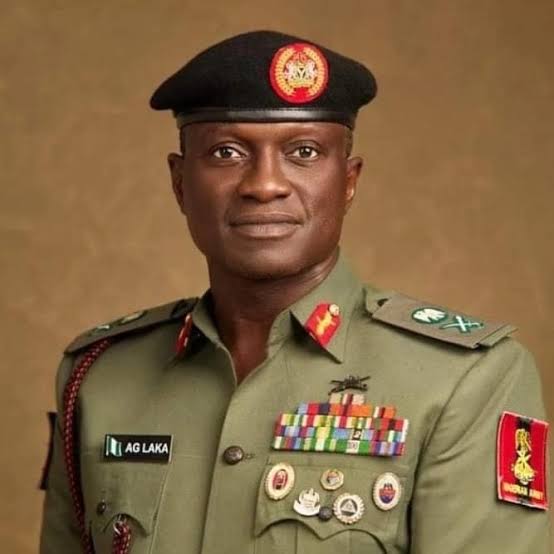
The revelation was made on Tuesday in Abuja by the Director-General of the National Counter Terrorism Centre, Maj.-Gen. Adamu Laka, during an end-of-year briefing, where he detailed ongoing collaborations with major social media platforms.
Laka said platforms including TikTok, Facebook, Instagram, Snapchat and X have been exploited by terrorists to publicise their activities, prompting sustained engagements with the companies to neutralise security threats online.
“The issue of social media platforms used by terrorist groups—if you knew how many accounts we took down. We have had several meetings with these social media platforms like: TikTok, Instagram, Snapchat, Facebook and X.
“They are businesses looking to grow their subscribers, but we engage them, explain the effects of certain posts on national security, and we take them down.
“There was a time when bandits would go on TikTok showing their loot. We took those accounts down—you don’t see that again. At some point, they were even doing live streams and holding conversations, but we’ve been able to handle all that,” he said.
The counter-terrorism chief noted that terror groups continually adjust their methods by using aliases and unverified accounts, forcing security agencies to constantly adapt and strengthen digital surveillance and response strategies.
Laka also exposed ransom payments as a major lifeline for terrorist financing, revealing that kidnappers increasingly rely on point-of-sale operators to move and withdraw funds, complicating tracking efforts.
“You see a transfer made by terrorists, and when you investigate the account, it belongs to a POS operator. The kidnappers give out the POS operator’s number, the money is transferred, and they go to collect it,” he said.
He said security agencies have intensified efforts to trace ransom payments, arrest collaborators, and dismantle financing networks, though he stressed that operational specifics could not be disclosed for security reasons.
According to him, multiple arrests, prosecutions, asset recoveries, and seizures have already been recorded as part of Nigeria’s obligations under international anti-money laundering and counter-terrorism financing frameworks.
Laka added that Nigeria’s recent progress in meeting Financial Action Task Force requirements was driven by coordinated investigations involving security agencies, financial intelligence bodies, and the judiciary.
While acknowledging the evolving nature of terrorist tactics and the impact of instability in the Sahel region, he assured Nigerians that authorities would continue to scale up both physical and digital counter-terrorism operations.
“Towards the end of 2023, the security situation in Nigeria was improving. But after the coups in some Sahel countries, the situation worsened because these terrorist groups have connections across the region.
“So Nigeria has to play a leadership role in West Africa and the Sahel to address these threats. As long as those countries continue to face these challenges, Nigeria will also face them. We are doing our best, and we will not relent. In 2026, we are going to up our game.”
The government said the ongoing purge of extremist content online follows repeated calls for social media platforms to remove accounts and posts that promote, glorify, or facilitate terrorism and other criminal activities.