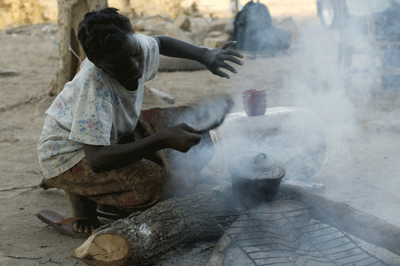
Millions of Nigerian children could be paying a hidden price for the meals cooked in their homes, as new research links firewood and kerosene cooking to poorer brain development and lifelong disadvantages.
A shocking new study has revealed that children exposed to smoke from traditional cooking fuels are more likely to suffer developmental delays, lower intelligence scores and behavioural challenges compared to those raised in homes using cleaner energy.
Despite the dangers, firewood remains king in Nigerian kitchens. Fresh data from the National Bureau of Statistics’ 2024 Residential Energy Survey shows that 67.8 per cent of Nigerians still rely on firewood for cooking. Bauchi State leads with a staggering 91.0 per cent dependence, followed by Sokoto at 77.8 per cent, while Oyo records the lowest usage at 48.0 per cent.
Health experts warn that the smoke inhaled daily by women and children goes far beyond coughing and watery eyes. Prolonged exposure has been linked to pneumonia, lung cancer, low birth weight and vision problems; and now, damaged brain development.
Speaking at the Household Air Pollution and Cognition (HAPCOG) stakeholders’ meeting, consultant psychiatrist Dr Yetunde Adeniyi disclosed findings from a long-term study tracking children born between 2015 and 2026. The verdict was grim: children whose mothers cooked with firewood or kerosene showed clear developmental setbacks when compared with peers whose families used cleaner fuels like ethanol.
The research, which capped nearly 20 years of investigations by the Centre for Population and Reproductive Health (CPRH), the Healthy Life for All Foundation and the University of Chicago, followed pregnant women and their children over several years.
At age seven, the children were tested for intelligence, behaviour and adaptive skills. Those from firewood and kerosene homes consistently scored lower and struggled more than children raised in clean-fuel households.
Pulmonologist Professor Sola Olopade explained the danger lies in what pollution does to unborn babies.
“This is especially dangerous in organs supplied by small blood vessels, such as the heart, brain, and placenta,” Olopade said. “The placenta is the baby’s lifeline. When pollution damages it, the baby develops under stress in a low-oxygen environment.”
He warned against dismissing the findings as an attack on earlier generations.
“Pollution does not erase intelligence; it suppresses it. Many people who excelled despite these conditions might have performed even better in cleaner environments,” he said.
The good news, experts say, is that the damage is not permanent. Reducing exposure, improving nutrition and switching to cleaner fuels can help children recover and thrive.
Professor Dosu Ojengbede, Director of CPRH at the University of Ibadan, said clean cooking is a game-changer for mothers and babies alike. Women who used clean fuels recorded lower blood pressure, fewer miscarriages and stillbirths, and healthier full-term pregnancies.
He warned that pollution effects can linger even after birth, as newborns may continue to suffer from toxins absorbed during pregnancy.
Experts are now calling for urgent nationwide action, stressing that clean cooking fuels such as LPG, ethanol and solar energy are not just safer but cheaper in the long run, given the high medical costs and loss of lives linked to smoke exposure.