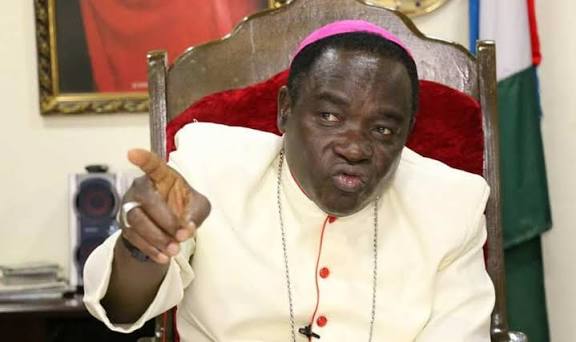
Catholic Bishop of Sokoto Diocese, Matthew Kukah, is a fearless clergy, activist and active voice against injustice. As he has been doing even under military rule in Nigeria, Bishop Kukah has continued to speak truth to power and appears undaunted by what frightens others. He does not hide under the table when the need arises for him to counsel, chastise or rebuke all in the quest for a better society for all. In this interview, Kukah examines what works and does not work in Nigeria and offers some ideas to move the country forward.
Are worried about the way things are going in the country?
There can be no satisfaction. A great man of the church, St Augustine, once said that we, human beings, our hearts are restless until they rest in God. As long as we are humans, we’ll always continue to aspire to new things. You started in your newspaper as a reporter, then you aspired to become other things, then you became a copy editor, sub-editor and editor. After some time, you may want to be either Director or Managing Director. That’s the way the human mind is constructed. And I think that for us, even as citizens of Nigeria, I think that is also one of the things that is missing, our failure to understand that this is a journey. I delivered a lecture in Federal University Oye Ekiti, precisely on the seventh of this month and I titled it, ‘They crawled so we can walk: the imperative of inter-generational compensation in Nigeria’. And the point I tried to make was that a similar issue became prevalent during the Obama administration when it was pointed out that the Africans that came to the U.S as slaves crawled in their suffering so that their children would walk. They ensured that these children could walk so that their next generation could run and the next generation could fly. Unfortunately for us in Nigeria, that logic doesn’t have coherence. But if you tell your son now about when you came to Lagos, how you were sleeping on the floor, he would say, “Daddy, are you mad?” That is because he doesn’t understand the sacrifices that were made. I made the point that we have to develop a much more positive outlook in terms of what we have accomplished because we have accomplished quite a lot.