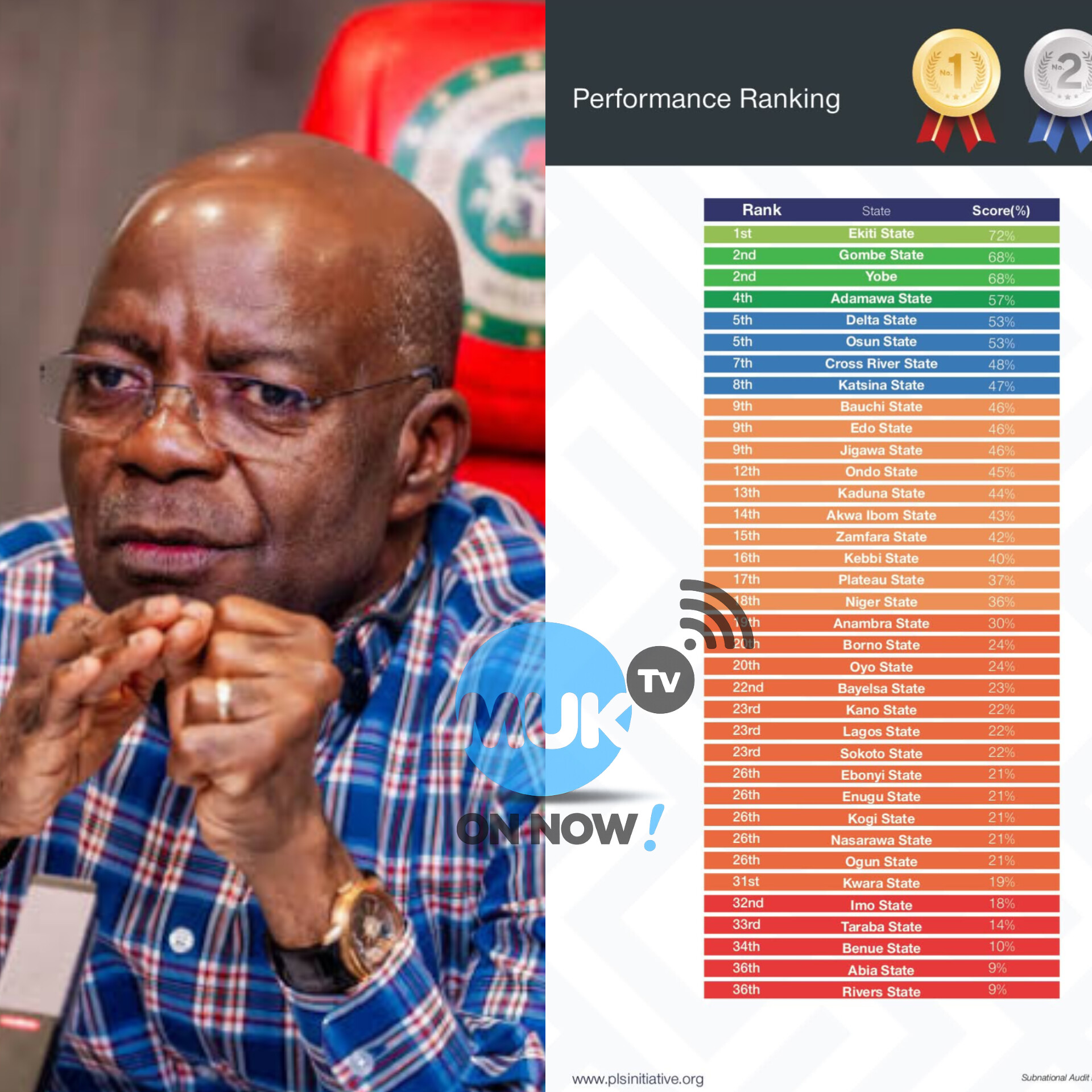
Abia State has been slammed to the bottom of Nigeria’s audit transparency ranking, scoring a dismal 9 percent in the 2025 Subnational Audit Efficacy (SAE) Index, a development that adds to the urgent calls for reform.
The damning report, released by the Paradigm Leadership Support Initiative, placed Abia 36th out of 36 states, far below the national average of 34.5 percent, exposing glaring weaknesses in fiscal accountability of the Governor Alex Otti’s administration.
Reacting to the report, the Foundation for Environmental Rights, Advocacy & Development (FENRAD) described the ranking as a clear sign of deep-rooted governance failures.
In a statement issued on April 6, the group flagged “critical accountability gaps,” pointing to weak financial autonomy for audit institutions, poor publication of audit reports, and ineffective legislative oversight.
“Abia State’s position at the bottom of the 2025 Subnational Audit Efficacy Index is a clear indication of systemic weaknesses in fiscal governance and accountability,” the group said. “This is not merely a ranking—it is a reflection of the urgent need for institutional reforms, transparency in public financial management, and political will to implement audit recommendations.”
The situation appears even more troubling within the South-East, where Abia trails behind its regional counterparts, despite all of them falling below the national benchmark.
Anambra scored 24 percent, Ebonyi and Enugu posted 21 percent each, while Imo recorded 18 percent.
“It is even more concerning that Abia lags behind its South-East counterparts—Anambra (24%), Ebonyi (21%), Enugu (21%), and Imo (18%)—all of which are already performing below the national average. This highlights a widening accountability gap that requires immediate and deliberate corrective actions,” FENRAD added.
FENRAD warned that the state’s poor performance could trigger serious consequences, including dwindling public trust, wasteful spending, weak service delivery, and heightened corruption risks.
The group issued a strong call for immediate action, urging the Abia State Government to overhaul its audit systems, ensure transparency in financial reporting, and strengthen legislative scrutiny.
“We call on the Abia State Government to move beyond rhetoric and demonstrate concrete commitment to fiscal transparency and accountability. Citizens deserve to know how public funds are managed, and governance must reflect openness, responsibility, and measurable performance,” the statement said.
Beyond government action, FENRAD also called on the State House of Assembly, civil society organisations, and development partners to join forces in reversing the disturbing trend.
Reaffirming its stance, the organisation stressed that accountability remains the backbone of sustainable development and warned that Abia’s current standing signals a dangerous lag both nationally and regionally.
“Abia State’s position signals a serious lag not only nationally but also within the South-East region, further emphasizing the urgency for reform,” the statement said.
FENRAD further demanded concrete steps, including granting full financial and administrative autonomy to the Office of the Auditor-General, ensuring timely publication of audit reports, and revitalising the Public Accounts Committee to enforce accountability.
The group also emphasised the need for stronger citizen participation, advocating open budgeting processes, deeper civic engagement, and the promotion of public accountability platforms to restore trust and transparency in governance.