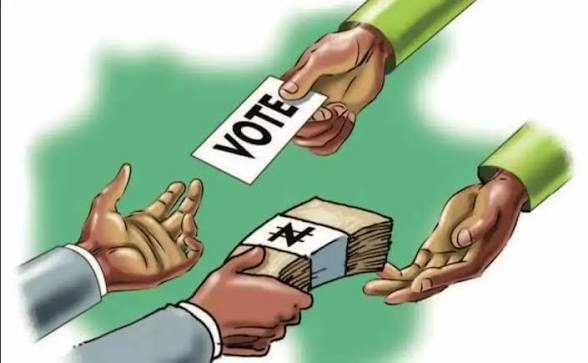
MONEY is debasing politics in Nigeria. With a presidential nomination form going for N100 million in the ruling party and N51 million in a PDP faction, the middle class is automatically filtered out. This leaves only the moneybags to decide the fate of over 237 million people. This systematic assault on democracy is dangerous. Therefore, Nigeria must de-monetise politics.
Ahead of the 2027 general elections, Nigeria is making the most uncomfortable headlines. A governorship form costs N50 million in a country where the minimum wage is N70,000.
A senatorial aspirant must find N30 million in cash, paid upfront, before a single vote is cast. This is not democracy; it is a bazaar, where the highest bidder captures power and the keys to the public treasury.
This mercantilist system strips people of their right to participate in running the country. The door is slammed against a university professor earning about N600,000 monthly.
It would take him decades—without spending a kobo—before he can afford a presidential nomination form.
The message is blunt: intellect, competence, and vision are irrelevant; only liquidity counts. The same exclusion applies to doctors, engineers, entrepreneurs, and civil society leaders who lack access to vast personal fortunes, often accumulated through crime.
This monetised gateway has captured the political process for the super-rich. It entrenches a system of “godfathers” who bankroll forms and campaigns, installing stooges in office.
Governance becomes a debt to be serviced, not a duty to be performed. Public office is treated as an investment to be recouped, handsomely, through patronage, inflated contracts, and outright corruption.
Consequently, elections are marred by vote-buying and ballot manipulation, with post-election litigation often determining outcomes.
The judiciary, expected to be the last defence, has too frequently been drawn into this cycle, undermining public confidence.
Nigeria’s trajectory contrasts sharply with practices elsewhere. In many African countries, nomination fees exist but are far more modest.
In Ghana, presidential form fees have been in the tens of thousands of cedis, not millions. Parliamentary fees are significantly lower.
In Kenya, parties charge nomination fees that are nowhere near Nigeria’s astronomical levels.
In South Africa, the president is chosen by the parliament, at no cost to the candidate.