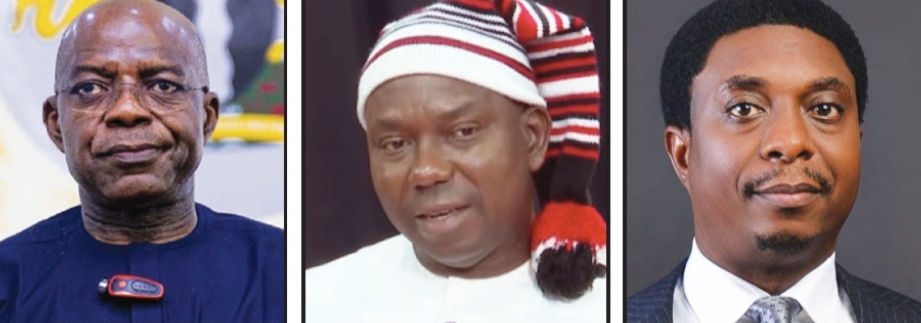
The race for the Abia State governorship in 2027 is shaping up to be a major political contest, with incumbent Governor Alex Otti seeking a second term amid challenges from candidates of the Peoples Democratic Party (PDP), All Progressives Congress (APC), African Democratic Congress (ADC) and other political parties.
With the Independent National Electoral Commission (INEC) publishing its final list of candidates, 15 contenders are expected to participate in the election scheduled for February 6, 2027. The list comprises 14 men and one woman.
The candidates include Doris Uzumma Umezurike of the African Action Congress (AAC), Kalu Kalu Agu of the ADC, Ikechukwu George Nwachukwu of the Action Democratic Party (ADP), Eric Chinemuechueya Opah of the APC, Ijioma Uchechukwu Charles of APGA, Umunnah Victor Jireh of the Allied Peoples Movement (APM), Ijioma Nwokoro Ijioma of the Action Peoples Party (APP), incumbent Governor Alex Chioma Otti of the Labour Party, Ogah Iroetugo Ndubuisi of the Nigeria Democratic Congress (NDC), Leo Onyekwere of the National Democratic Party (NDP), Anthony Kelechi Apugo of the New Nigeria Peoples Party (NNPP), Jerry Jerry of the National Rescue Movement (NRM), Kelechi Anosike of the PDP, Obasi Uba Ekeagbara of the Social Democratic Party (SDP), and Onukwue Prince Chibunna of the Zenith Labour Party (ZLP).
The election is expected to be influenced by the performance of the incumbent administration, party structures, political alliances, the state’s zoning debate, economic concerns and the ability of the candidates to mobilise support across the 17 local government areas.
Otti enters the contest with the advantage of incumbency and a record his supporters say includes extensive road construction and rehabilitation, improvements in primary healthcare, free education up to Junior Secondary School Three, recruitment of teachers and health workers, and regular payment of salaries and pensions.
His campaign message, “From Rescue to Consolidation,” is built around the argument that his administration has made significant progress and deserves another four years to consolidate its achievements.
Supporters point to improved road networks, the rehabilitation of public infrastructure and the administration’s reported efforts to clear salary and pension arrears. The governor has also received endorsements from traditional rulers, market associations, transport unions, manufacturers and political figures across party lines.
However, his administration faces criticism over the cost of some infrastructure projects, the handling of workers’ issues, rural development and allegations of uneven distribution of projects. Critics have also questioned the government’s approach to local government administration and the level of consultation with political stakeholders.
The leadership dispute within the Labour Party, involving factions associated with Otti and Julius Abure, is another issue that could attract attention as the election approaches. The legal and political implications of the dispute remain relevant to the governor’s political fortunes.
The APC’s Eric Opah is also positioning himself as a major challenger, with an argument centred on the need for Abia to strengthen its relationship with the Federal Government under President Bola Tinubu.
Opah believes that alignment with the ruling party at the centre could improve the state’s access to federal opportunities, infrastructure projects and investment. He also presents his business background as an advantage, promising industrial development, employment opportunities and improved public services.
Among his campaign proposals are the establishment of a world-class hospital, industrial parks, greater investment in Ukwa and increased youth employment. However, questions have been raised about the feasibility and funding of some of his promises, as well as his ability to build strong grassroots support across the state.
The PDP’s Kelechi Anosike is seeking to revive the party’s political fortunes after its 24 year hold on the Abia governorship ended in 2023. Anosike, a legal practitioner with academic and professional experience in property and petroleum law, is presenting himself as a fresh face within the party.
His campaign centres on a welfare-driven approach, with proposals that include a minimum wage of ₦90,000, potentially rising to ₦100,000, the settlement of gratuity arrears within his first 100 days in office, the recall of 15,000 workers and the establishment of a microfinance bank for traders and artisans.
He has also promised to support farmers, women, young people and small businesses through targeted economic programmes.
Anosike’s challenge will be convincing voters that his candidacy represents a departure from the PDP’s previous years in power. Although he maintains that he was not part of the administrations that governed the state before 2023, the party’s historical record remains a major issue his opponents are likely to raise.
The ADC candidate, Kalu Kalu Agu, is seeking to capitalise on the debate surrounding political representation and the demand for greater attention to Abia North Senatorial District. Agu, who hails from Ohafia, has criticised the Otti administration over what he describes as inadequate development in parts of the district.
He has raised concerns about road infrastructure, electricity and healthcare, while proposing a ₦150,000 living wage and other development initiatives.
Agu’s candidacy could attract voters who believe Abia North deserves greater political representation, particularly as the three leading candidates from the Labour Party, APC and PDP are from Abia Central. However, the ADC will need to demonstrate its grassroots strength and ability to mobilise voters across the state’s 184 wards and 4,062 polling units.
Another contender drawing attention is the NDC candidate, Ogah Iroetugo Ndubuisi, whose political appeal is partly linked to the party’s association with Peter Obi.
Ogah, a businessman with interests in the oil and gas sector, is campaigning on industrialisation, job creation and economic production. He has proposed transforming Aba into a major manufacturing and export centre, reviving struggling industries and reducing the cost of governance.
He has also questioned the cost of some projects executed by the Otti administration, calling for greater transparency in public spending.
However, the NDC’s ability to build a strong political structure in Abia and the extent to which Obi’s popularity will translate into support for its governorship candidate remain important questions. Some voters could support Obi for president while retaining their preference for Otti in the governorship election.
The AAC candidate, Doris Uzumma Umezurike, is the only woman among the 15 candidates. Her candidacy gives women representation in a contest otherwise dominated by male politicians.
The candidate, identified in the campaign material as a former Nollywood actress and political appointee, is expected to draw attention through her public profile and criticism of the incumbent administration. Her campaign proposals reportedly focus on decentralised development, reliable power, rural infrastructure, education, industrialisation and improved security.
Her challenge, like that of several smaller-party candidates, will be translating public visibility into a strong grassroots political organisation capable of competing across the state.
Beyond the leading candidates, the election is expected to test the influence of party structures, endorsements, campaign financing and political alliances. The Abia Charter of Equity and calls for greater inclusion of Abia North in the state’s leadership arrangement may also feature prominently in the campaigns.
The APC is expected to make federal alignment a central part of its argument, while the PDP will seek to rebuild its former political base. The Labour Party, on the other hand, will campaign on Otti’s record in office and the need for continuity.
For voters, the central issues are likely to include road infrastructure, employment, education, healthcare, security, workers’ welfare and the cost of living. Candidates will be under pressure to explain how their proposed policies can be funded and implemented.
Although Otti appears to have an advantage as the incumbent, the strength of his opponents, the possibility of political realignments and the ability of parties to mobilise voters could shape the outcome.
Ultimately, the February 2027 election will offer Abians an opportunity to assess the incumbent government’s performance against the promises and alternatives presented by the other candidates.
Whether voters choose continuity under Otti or opt for a new administration will depend on the issues that matter most to them when they head to the polls.
Written by Enitan Mudashiru