South Africa’s Independent Communications Authority of South Africa (ICASA) has issued a formal notice of non-compliance to SpaceX, ordering Elon Musk’s Starlink satellite internet service to stop all unauthorized operations within the country.
The notice, dated October 14, 2026, was confirmed by Communications Minister Solly Malatsi in a parliamentary reply to Umkhonto Wesizwe MP Adil Nchabeleng, who had queried what steps the government was taking regarding the illegal use of Starlink in South Africa. Malatsi revealed that ICASA established a dedicated task team, carried out investigations and inspections, and ultimately served SpaceX with the formal order to cease its unauthorized provision of services in the republic.
Under South Africa’s Electronic Communications Act, telecommunications license holders must have at least 30% ownership by historically disadvantaged groups, a rule intended to redress the economic legacy of apartheid. SpaceX has declined to reduce its local equity stake to satisfy that threshold and has never applied for a license, with the company describing the requirement as racially discriminatory, a characterization South African officials have rejected. Musk has proposed alternatives, including a pledge of approximately R500 million to connect 5,000 rural schools and a R2.5 billion investment package involving local partnerships for fibre connectivity, land leasing, and maintenance.
South Africa also introduced a policy adjustment in December 2025 allowing foreign satellite operators to satisfy empowerment targets through Equity Equivalent Investment Programmes, but regulatory approval for Starlink has not followed. How users accessed Starlink illegally Despite the absence of a license, an estimated 14,000 South Africans were using Starlink as of early 2026 by purchasing kits registered in neighboring countries such as Lesotho or Eswatini, where the service is licensed, and then using them domestically through roaming arrangements.
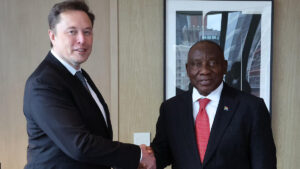
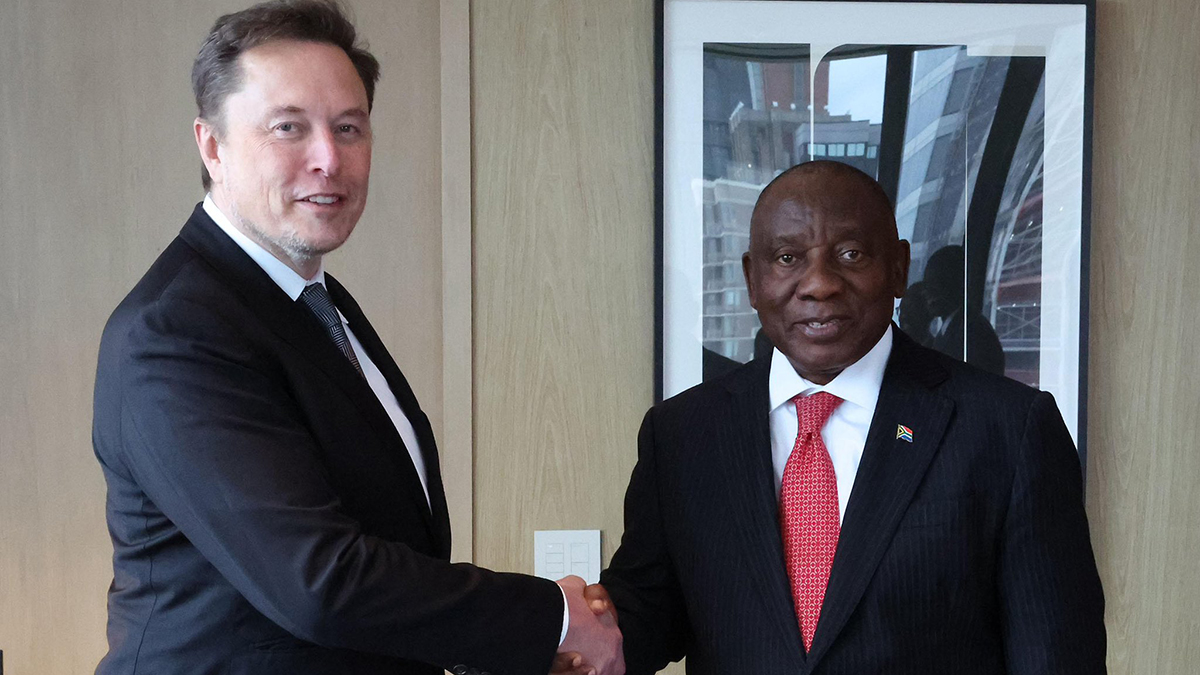
ICASA confirmed in a Government Gazette that this practice was illegal. Starlink progressively tightened its roaming rules, cutting continuous-use periods from 60 days to 30 days and later to seven days, while introducing identity and country-of-origin verification, though the usage persisted. The regulator has warned that if the unauthorized provision of the service continues, it may lodge a formal complaint with the International Telecommunication Union to pursue international intervention. The dispute also carries a political dimension. President Cyril Ramaphosa, speaking during a visit to Silicon Valley in November 2026, called on Musk to remember his South African roots and contribute to the country’s development, while insisting that foreign companies must comply with local empowerment laws.
Ramaphosa also suggested Musk “does not fully understand” the impact of apartheid, citing that the apartheid government spent 12 rand on Musk’s education for every one rand spent on his own. “If you don’t understand that, you will never fully understand what needs to be done to repair the damage that has been caused,” Ramaphosa said.
Musk said, “ Starlink is not allowed to have an Internet provider license in South Africa for the sole reason that I am not Black,” adding, “This is not ok.” Musk made the comment as he shared an excerpt of his interview at the Qatar Economic Forum in 2025, where he made similar claims. ICASA has indicated that further administrative or legal action remains under consideration, with enforcement processes still ongoing.