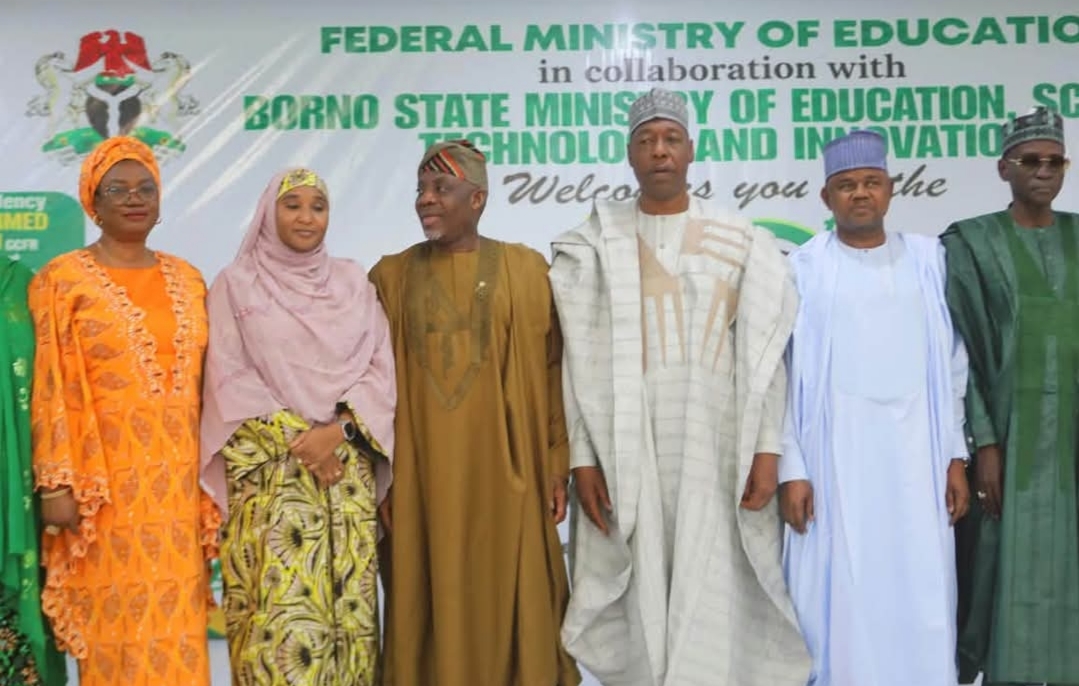
The Federal Government has announced major investments and policy interventions across Nigeria’s education sector, including ₦38.93 billion released to 166 public tertiary institutions and approximately ₦379 billion disbursed through the Nigerian Education Loan Fund (NELFUND).
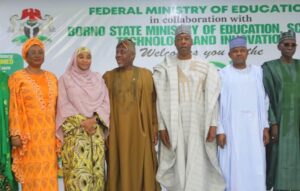
The Minister of Education, Dr Maruf Tunji Alausa, disclosed this during the 70th National Council on Education (NCE) meeting held in Maiduguri, Borno State, from November 23 to 26, 2026.
The meeting, themed “Infrastructure Development and Teacher Motivation: Panacea for Improved Learning Outcomes,” brought together education stakeholders to deliberate on measures to improve access, teaching standards and learning outcomes across the country.
Alausa said the ₦38.93 billion intervention was released under the Needs Assessment Intervention Programme to address infrastructure gaps in 166 public tertiary institutions, comprising 79 universities, 46 polytechnics and 41 colleges of education.
He also highlighted the $552 million HOPE for Basic Education Programme and the expansion of the Adolescent Girls Initiative for Learning and Empowerment (AGILE) from 18 to 21 states. Other interventions include foundational literacy and numeracy, Almajiri education, alternative learning opportunities and efforts to reintegrate pregnant and married adolescent girls into formal education.
On student financing, the minister disclosed that NELFUND had received more than 2.65 million applications, with approximately ₦379 billion disbursed to support students’ tuition fees and upkeep.
He added that the Federal Government’s Technical and Vocational Education and Training (TVET) programme had attracted over 2.8 million applications. According to him, ₦65.7 billion had been paid in stipends to more than 160,000 trainees, while ₦30.2 billion had been committed to strengthening training centres and improving access to practical, industry-relevant skills.
Alausa further disclosed that more than 80,000 teachers were undergoing certification and licensing through the Teachers Registration Council of Nigeria (TRCN). The government is targeting 75 per cent teacher certification by the end of 2027 and the certification of all senior secondary school teachers by 2028.
Other investments highlighted by the minister include ₦150 billion for tertiary institution revitalisation, more than ₦32 billion for needs-assessment projects in public colleges of education and ₦55 billion for medical education infrastructure.
On digital learning, he cited over ₦11 billion allocated to digital skills development, artificial intelligence training for 6,000 teachers and the integration of more than 40,000 geo-located schools into digital management systems. He also disclosed that approved educational platforms would be zero rated to improve access to digital learning resources.
The minister said 34 solar mini-grids had been provided in tertiary institutions, while plans were underway to extend independent solar power systems to all federal tertiary institutions by 2028. He also announced ₦2.2 billion in grants to support 45 student led ventures.
Alausa stressed that investment in school infrastructure must be matched with teacher motivation, professional development and accountability to achieve meaningful improvements in learning outcomes.
He commended Borno State Governor, Babagana Umara Zulum, for the reported increase in school enrolment from approximately 770,000 learners in 2018 to 1.8 million, and thanked the state government and residents for hosting the meeting.
In his remarks, Governor Zulum welcomed the Federal Government’s interventions in student financing, technical and vocational education and teacher development. He emphasised the importance of connecting education with industry to address skills gaps and unemployment.
The governor disclosed that Borno State was establishing 27 high-skilled colleges, with 15 already completed and the remaining facilities expected to be completed by the end of the year.
He also highlighted investments in school infrastructure, teacher recruitment and welfare, as well as efforts to strengthen links between non formal and formal education. According to him, the state currently has 5,792 usable classrooms and 129 functional senior secondary schools, compared with 34 in 2019.
The Minister of State for Education, Professor Suwaiba Sa’id Ahmad, commended the Borno State Government for expanding educational infrastructure, particularly in communities affected by conflict.
She said the investments were helping restore educational opportunities for children whose schooling had been disrupted by insecurity.
Ahmad also highlighted progress under the Nigeria Education Sector Renewal Initiative (NESRI), including the rehabilitation of 38 technical colleges, AGILE’s reach to more than seven million girls and the registration of over 53,000 teachers through EduRevamp.
She further cited the expansion of NELFUND, reforms in Almajiri education and STEMM, as well as the development of the National Education Data Infrastructure (NEDI).
The minister urged stakeholders to ensure that resolutions reached at the meeting were effectively implemented, monitored and evaluated. She maintained that improved infrastructure must go hand in hand with teacher welfare, motivation and professional development.
Earlier, the Borno State Commissioner for Education, Science, Technology and Innovation, Engr. Lawan Abba Wakilbe, described the meeting as historic for the state and reaffirmed the government’s commitment to infrastructure development, teacher recruitment and capacity building.
In her closing remarks, the Director Overseeing the Office of the Permanent Secretary, Federal Ministry of Education, Dr Folake Olatunji-David, commended delegates for their contributions and commitment to strengthening the country’s education system.
She said the resolutions of the meeting provided a roadmap for advancing education under President Bola Tinubu’s Renewed Hope Agenda.
Olatunji-David thanked the Borno State Government, University of Maiduguri, development partners, education stakeholders, committees and the Joint Consultative Committee on Education Secretariat for their contributions.
She reaffirmed the Ministry’s commitment to working with state governments and other stakeholders to implement the resolutions and expand access to quality and inclusive education for Nigerian children.
The resolutions of the 70th National Council on Education meeting are contained in the Council’s communiqué.
Written by Enitan Mudashiru