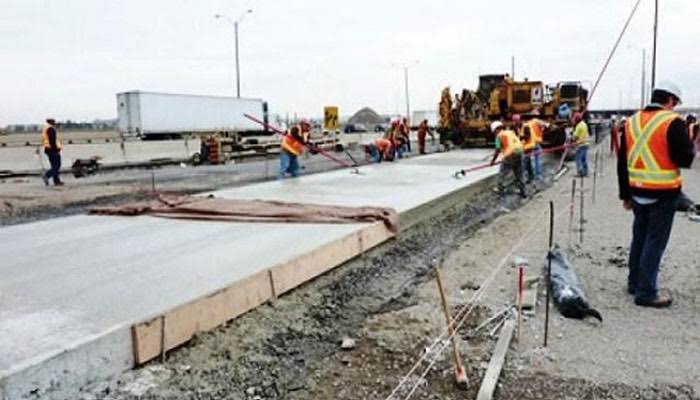
The Minister of State for Works, Bello Goronyo, has assured Nigerians that the Abuja-Kaduna-Kano Road is built to endure for generations, with a projected lifespan of 50 to 100 years, thanks to the high-grade materials deployed by the contractor, Infiouest Nigeria Limited.
During an inspection of the ongoing project, Goronyo praised the quality of work, noting that the use of reinforced rigid concrete pavement signals a significant shift in Nigeria’s infrastructure strategy.
He lauded the contractor for its professionalism and alignment with President Bola Tinubu’s vision for national development.
“What we are seeing here is superb. The reinforced rigid pavement is expected to last 50 to 100 years, superior to conventional asphalt,” the minister stated in Abuja, through a release by the Director of Press and Public Relations, Mohammed Ahmed.
Goronyo confirmed that approximately six kilometres of the road have already been completed, reinforcing the administration’s resolve to enhance mobility, reduce travel time, improve security, boost commerce, and create jobs.
The Project Manager for Infiouest Nigeria Limited, Mr. Robert Turner, underscored the company’s unwavering dedication to excellence.
“There are no shortcuts. We are giving our very best to achieve the project’s goals,” he said.
“We have a spirited and dedicated team. Despite challenges, we are fully focused on delivering this critical project within record time,” he added.
Speaking earlier, Permanent Secretary of the Federal Ministry of Works, Olufunsho Adebiyi, explained the technical rationale behind adopting rigid pavement technology, citing its superiority in handling Nigeria’s soil conditions, shallow water table, and heavy axle loads.
“Rigid pavement is new to Nigeria, but it has become necessary due to the consistent failure of flexible pavements under our local conditions,” he said.
He drew comparisons with the challenges faced on busy corridors like the Apapa-Oworonshoki Expressway in Lagos, where bitumen and cement interactions have often compromised road durability.
According to him, the new method—reinforced with Y20 steel bars at 200mm intervals—is even stronger than most bridge decks.
“This new method, reinforced with Y20 steel bars at 200mm centres, is stronger than most bridge decks,” he noted, adding that “It is a sustainable solution that will outlast many of us and withstand the test of time.”
Adebiyi also appealed to commuters to be patient as work progresses, assuring that phased openings of completed segments will ease movement.
“We understand the temporary discomfort, but in the end, this road will significantly improve lives and the economy,” he said.
The Zuba section, he added, remains a critical link in Nigeria’s transportation corridor, and the federal government is fully committed to its timely and successful completion.