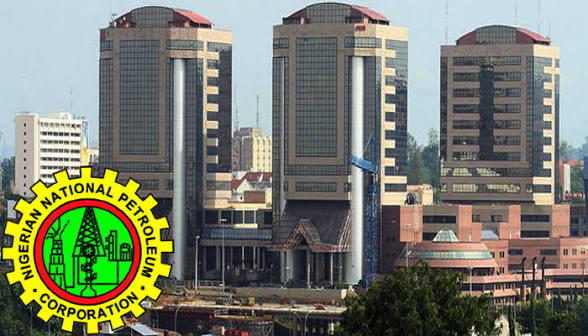
The Nigerian National Petroleum Company Limited has raised the official selling prices of all 37 Nigerian crude grades for May-loading cargoes, according to a report by Oilprice.com.
The report stated that Nigeria is reaping the benefits of the US-Iran war, as the NNPC increased the price of its flagship grade, Bonny Light, by $6.13 per barrel for May compared to April.
Similarly, Forcados was also raised by $7.01 per barrel. This development may indicate that the Dangote Petroleum Refinery could pay more for crude, a move that may ultimately push up fuel prices.
“Nigeria reaps the benefit of the Iran war. Nigeria’s national oil company NNPC has raised the official selling prices of all 37 Nigerian crude grades for May-loading cargoes, hiking its flagship grade Bonny Light by a whopping $6.13 per barrel compared to April, while Forcados is up by $7.01 per barrel.
The Bonny Light hit $124.86 per barrel on Tuesday following escalating tensions in the Middle East. This was about $14 above the global benchmark, Brent crude, which rose above $110 per barrel.
Brent futures hit $110 per barrel as industry voices increasingly warned that the US-Iran war could degenerate into a “forever” conflict. That sentiment was reinforced by the failure of last weekend’s Islamabad talks and US President Donald Trump’s subsequent comments on Iranian ceasefire proposals, saying he was “unhappy” with Tehran’s attitude.
Also, the sudden announcement of the UAE’s exit from OPEC appeared to overshadow developments in the US-Iran crisis on Tuesday, prompting speculation among market participants about a broader shake-up of Middle Eastern energy policies.
According to the Central Bank of Nigeria, Bonny Light rose by nearly $2 on Monday amid speculation over whether Iran and the United States might agree to reopen the Strait of Hormuz and allow the free movement of oil vessels.
Data from the CBN showed that Bonny Light was approximately $74 before the Middle East crisis escalated on February 28. Unless the Strait of Hormuz is reopened soon, fuel prices may continue to rise, even as the Nigerian government benefits from increased oil revenues.
Recently, energy economists called for targeted cash transfers to cushion the impact of rising fuel prices on vulnerable Nigerians, as tensions between the United States and Iran continue to unsettle global oil markets.
A former president of the Nigerian Association for Energy Economics, Professor Adeola Adenikinju, described the situation as a “two-edged sword” for Nigeria, with potential revenue gains from higher oil prices on one hand and worsening economic hardship for citizens on the other.
According to him, rising petrol costs have triggered increases in transportation fares and inflation, placing additional pressure on low-income households. “This is the time that Nigeria should say, ‘Look, we are sending some cash to those poor people who are vulnerable,’” he said, stressing the need for direct intervention to support the most affected.
He, however, noted that the absence of a reliable database of vulnerable Nigerians remains a major constraint to implementing effective cash transfer programmes. “If we have the data of all the poor people, this is the time that Nigeria should send some cash to those who are vulnerable, but we don’t have the data,” he added.
Adenikinju said while recent moves to increase allowances for civil servants may provide limited relief, such measures would exclude a large segment of Nigerians working in the private and informal sectors. He therefore urged both federal and state governments to collaborate in designing broader support mechanisms.