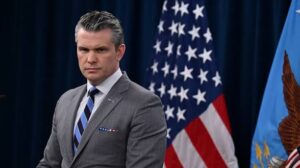
War Secretary Pete Hegseth will testify before Congress for the first time since the start of the Iran war, appearing at a House Armed Services Committee hearing that lawmakers say will double as a long‑delayed public accounting of the Trump administration’s strategy and spending in the conflict.
Hegseth is expected to appear before the House Armed Services Committee at the end of April, in a session formally convened to review the Pentagon’s annual budget request but now dominated by questions over the war in Iran, which began with U.S. strikes ordered by President Donald Trump in late February. It will be his first testimony on Capitol Hill since the conflict started, and the first chance for lawmakers to question him under oath about the administration’s objectives, timelines and rules of engagement.
The hearing comes as pressure has mounted on Republican leaders to hold public oversight sessions on the war after nearly two months of air and naval operations against Iran and its proxies across the region. Democrats on the committee have accused the majority of “ducking” their responsibility and warned that allowing Hegseth to discuss the conflict only in the context of a budget hearing falls short of the scrutiny a major war demands.
In a letter to Chairman Mike Rogers, more than two dozen Democrats argued that the complexity and scale of the Iran campaign and the possibility that U.S. ground forces could eventually be deployed require a dedicated oversight hearing. They cited “constantly shifting strategic and operational goals” and unresolved questions about the legal basis for the war, which has not been explicitly authorized by Congress even as it reaches the 60‑day mark under the War Powers Resolution.
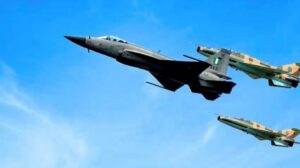
Hegseth has defended the campaign as a decisive blow against what he calls a decades‑long Iranian threat to U.S. forces, allies and global shipping, touting thousands of targets struck and claiming Iran’s military has been rendered “combat ineffective for years to come.” In recent remarks, he and Joint Chiefs Chairman Gen. Dan Caine have described strikes on Iranian naval vessels, air defenses and command sites, as well as operations to protect shipping in the Strait of Hormuz and hit Iran‑aligned militias in Iraq.
But lawmakers from both parties say they want clearer answers on the long‑term endgame, the risk of escalation and the Pentagon’s request for up to 200 billion dollars in additional war funding. With markets rattled and fuel prices rising as the conflict drags on, the upcoming testimony is likely to become a political flashpoint over how far the United States should go and how long it should stay in its confrontation with Tehran.