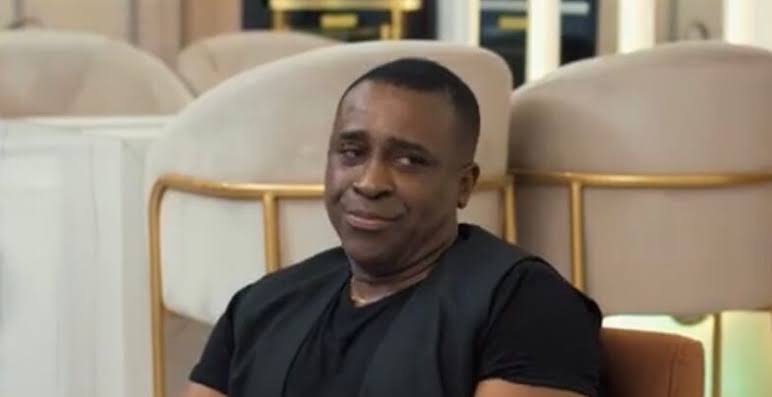
Popular Nigerian television presenter Frank Edoho has stirred emotional reactions after revealing a deeply personal fear about love, loss, and mortality, alongside candid reflections on depression, masculinity, and silent battles men face.
The former Who Wants to Be a Millionaire Nigeria host made the revelation during an interview on the YouTube program Outside The Box, where he spoke openly about emotional pain, personal growth, and how he wishes to be remembered.
In one of the most striking moments of the interview, he said:
“I don’t want to go to the gates of heaven and they ask me what killed me and they say it’s a woman. Whether that woman be my daughter, my wife, my mother, I don’t want that. I don’t want that to be my way out of this portal,” he said.
Edoho explained that his perspective is shaped by a desire to live a meaningful life and leave behind a positive emotional footprint.
“I want to die with a smile on my face saying that all the people I met, I tried to put a smile on their face, and to have the only regret that I wish I did more good. Not that I wish I had more time, that’s all,” he said.
He also delved into the emotional burdens men often carry in silence, describing manhood as a difficult journey where many suffer without speaking out.
“The task of manhood is very daunting. Men don’t speak. Men go through a lot. Whatever a man is going through, he’s just silent. He doesn’t say it. He holds it to himself. And some of them go to the grave with it. Too many, actually,” he said.
The broadcaster further disclosed that he once went through a very dark personal phase that lasted about two years, which he kept hidden from everyone around him.
“For two years, there was a couple of years back I was in a very dark hole but nobody knew. I couldn’t call you guys. I just said, you know what, this is a journey I have to make on myself to reorganise myself. And I’m happy I did. But at the time, I thought that the walls were caving in,” he said.
He attributed his ability to mask emotional struggles to his long experience in broadcasting, where composure on air is non-negotiable.
“Broadcasting taught me how to have a poker face. No matter what you’re going through, when it’s time to go on air, ‘Hi, good evening, welcome, I hope you’re having a nice time’, the only reason you’re not there is that you’re dead. If you’re alive, it doesn’t matter what you’re going through, you have to be there doing just that.”
However, he noted the difficulty of maintaining that same emotional control in real life.
“But ironically, I can’t do it in real life. I can’t switch off like I switch off when the microphone is in front of me,” he said.