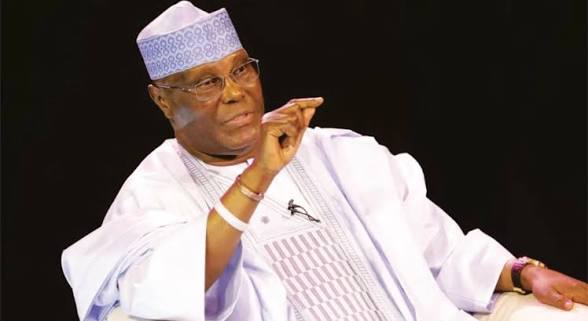
A fresh political storm erupted on Thursday after the Presidency and the ruling All Progressives Congress dismissed former Vice President Atiku Abubakar’s emergence as the African Democratic Congress presidential candidate as inconsequential, describing the opposition coalition behind him as a gathering driven by grievances rather than ideas.
Atiku polled 1,846,370 votes to defeat former Minister of Transportation, Rotimi Amaechi and economist Mohammed Hayatu-Deen, who secured 504,117 and177,120 votes respectively.
The primary election had sparked controversy after both Amaechi and Hayatu-Deen rejected the conduct of the voting process across the 36 states. and that FCT, insisting that the exercise was flawed.
The duo subsequently boycotted the collation and declaration of results.
Reacting, the Presidency said Atiku’s candidacy posed no electoral threat to President Bola Tinubu in 2027, while insisting that Nigerians would judge the next election on performance and not opposition realignments.
The development also triggered backlash with opposition parties warning that Atiku’s renewed ambition could deepen tensions over Nigeria’s delicate power rotation arrangement between the North and South, which has remained a major but unwritten principle shaping presidential politics since 1999.
Although not enshrined in the Constitution, the principle has remained a stabilising factor in the country’s fragile federal structure, often invoked by political parties and elite coalitions to justify zoning of presidential tickets across regions.