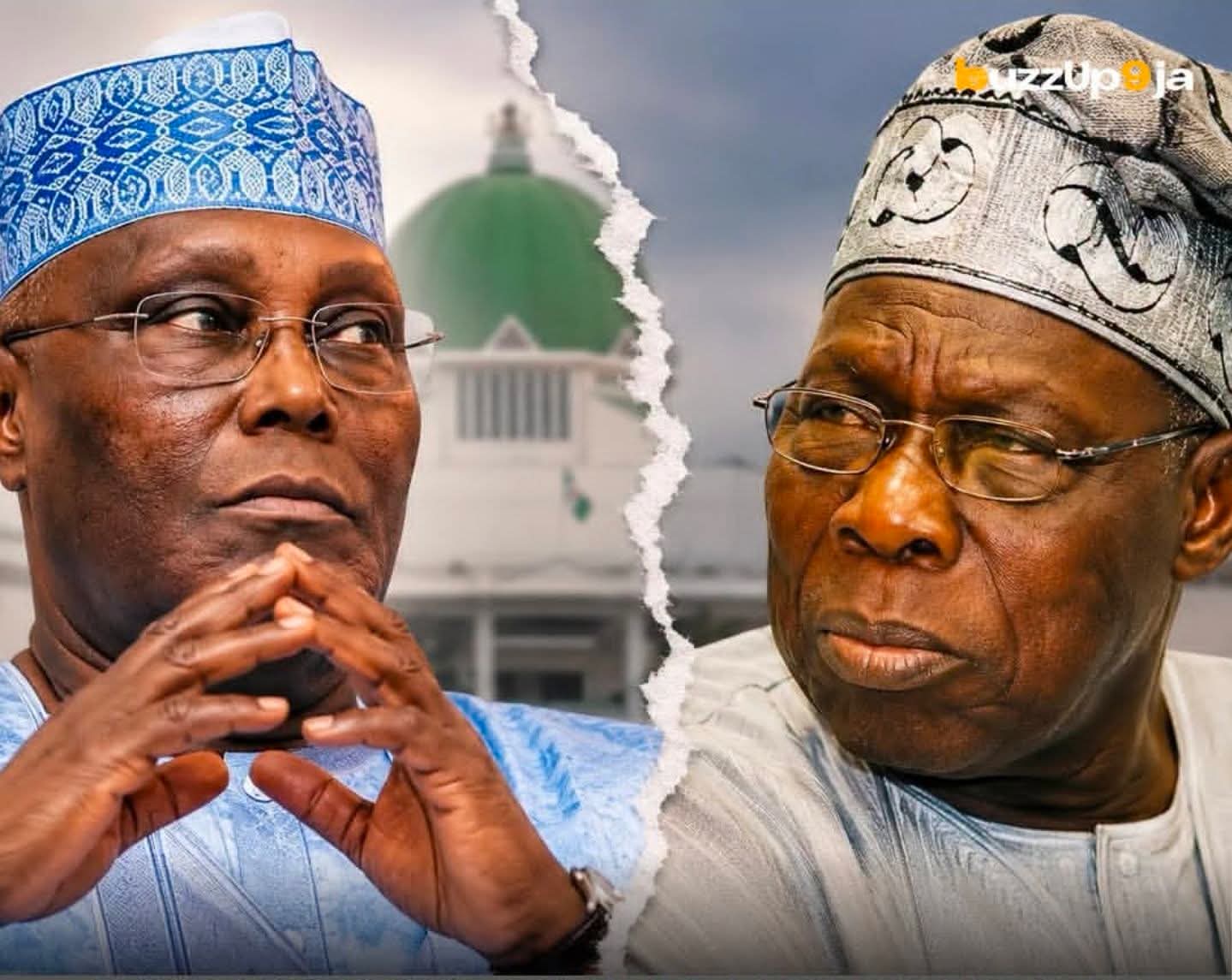
Former Vice President and presidential candidate of the African Democratic Congress, Atiku Abubakar, has launched another scathing attack on former President Olusegun Obasanjo, questioning his electoral strength and claiming that northern voters were instrumental to his emergence as president in 1999.
Atiku made the remarks while speaking with journalists on Wednesday amid the renewed war of words between him and Obasanjo over their political relationship and the events surrounding the 1999 presidential election.
“In 1999, he could not even win his own state or the South-West; it was Arewa that made him President. He possesses no electoral value,” Atiku said.
The latest clash follows Obasanjo’s recent description of his decision to pick Atiku as his running mate in 1999 as the “biggest mistake” of his presidency.
Obasanjo had also accused Atiku of disloyalty and alleged involvement in an attempt to impeach him during their time in office.
Atiku, however, rejected Obasanjo’s account, accusing the former president of rewriting history and attempting to exploit their past political relationship for advantage ahead of the 2027 general elections.
The ADC presidential candidate also defended his role in the 1999 political victory, saying he supported Obasanjo after his release from prison and helped build the political structure that eventually facilitated their emergence as president and vice president.
Turning to the 2027 election, Atiku highlighted what he described as his contributions to creating opportunities for young Nigerians during his tenure as vice president.
He said some beneficiaries of those opportunities had gone on to become governors, ministers, directors and other public officeholders.
Atiku promised that, if elected president in 2027, his administration would continue creating opportunities for young Nigerians to occupy leadership positions.
The former vice president is contesting the 2027 presidential election on the ADC platform after joining forces with other opposition figures seeking to unseat the ruling establishment.