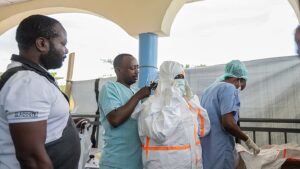
The Nigeria Centre for Disease Control and Prevention (NCDC) has approved a weekly payment of ₦100,000 per person to support individuals placed in isolation or quarantine as part of efforts to contain the Ebola outbreak in the Federal Capital Territory (FCT).
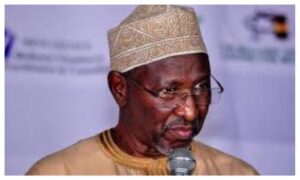
The agency’s Director-General, Dr Jide Idris, disclosed this during a press briefing on Sunday, explaining that the intervention followed complaints from people being monitored over the financial burden of feeding, accommodation and maintaining their families.
According to Idris, the financial support is intended to ease the burden on individuals required to comply with public health monitoring arrangements.
“We are paying for their accommodation; we are paying for their feeding. Some of them are asking for a stipend to maintain their families,” he said.
He added, “We are providing N100,000 per person per week just to maintain their comfort and feeding, because they were complaining.”
Idris said the payment was not part of the agency’s original plan but had become necessary because of the emergency.
“This was not planned for, but it is an emergency. We will continue to review it as we go along,” Idris said.
The NCDC boss also stressed that the responsibility for supporting people affected by public health emergencies should not rest solely on the FCT Administration. He said other state governments must be prepared to provide similar financial and logistical assistance if outbreaks occur in their jurisdictions.
“This is not the responsibility of the FCT alone. What we have to do for the FCT, we have to do for any other state, just in case,” he said.
He urged state governments to make adequate provisions for contact tracing, isolation and other emergency response activities.
The development comes as health authorities intensify efforts to prevent further transmission following the confirmation of an imported Ebola case in Abuja on October 20.
Idris said Nigeria had recorded one confirmed case at the time of the briefing, with 53 primary contacts identified for monitoring. They include healthcare workers, household members, domestic staff and personnel involved in collecting samples from the patient.
He explained that the contacts were being classified according to their level of exposure and monitored by public health teams. Anyone who develops symptoms would be assessed and tested.
According to the NCDC director-general, isolation arrangements had also been established for contacts who required them, with health officials monitoring their condition throughout the 21-day incubation period after their last possible exposure.
Idris disclosed that one contact who reported feeling unwell had tested negative, while surveillance and follow-up activities were continuing.
The agency is also strengthening infection prevention and control measures in healthcare facilities, training personnel and supporting the availability of protective equipment and laboratory supplies.
The confirmed case involves a woman who travelled to Nigeria from Uganda and tested positive for the Bundibugyo strain of Ebola virus. She reportedly developed symptoms on October 7, sought medical attention in Abuja on October 11 and was confirmed positive on October 20.
The World Health Organisation has classified the infection as an imported case, noting that investigations are ongoing to establish the likely source of exposure.
The regional outbreak has also affected the Democratic Republic of the Congo and Kenya, highlighting the importance of cross-border surveillance and the prompt identification of contacts.
Nigeria successfully contained an Ebola outbreak in 2014 through case identification, contact tracing, isolation and coordinated public health interventions.
Idris said the NCDC was drawing lessons from that experience to strengthen preparedness across the country. He emphasised that containing the current outbreak would require cooperation among government agencies, healthcare workers, affected contacts and members of the public.
He urged Nigerians to rely on verified information, avoid spreading rumours and cooperate with public health officials carrying out contact tracing and monitoring.