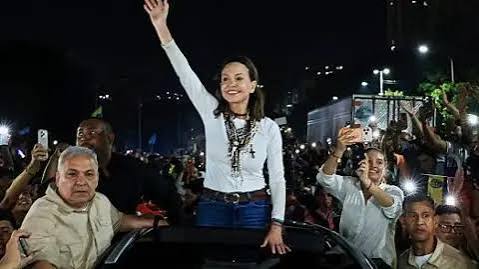
Driving down roads lined with jubilant supporters from the western state of Lara to the capital Caracas, Maria Corina Machado’s return to Venezuela could hardly have been more different to her exit 10 months earlier.
Colourful, loud, open and defiant, it stood in stark contrast to the way the Venezuelan opposition leader slipped out of the country in the dead of night in December last year to receive the Nobel Peace Prize in Oslo.
She had been unable to make it back to her homeland until now, thwarted on several occasions by the Venezuelan government – and by the Trump administration, which insisted the “time wasn’t right” for her return.
“Maria Corina is the indisputable leader of Venezuela,” says 20-year-old Gregory Noriega, wearing a sweatshirt emblazoned with the logo of the opposition movement Vente Venezuela. “Her return represents hope.”
A man wearing a white hoodie and chain. The letter V in Venezuela’s national colours and a map of the country is in the front of his hoodie. Behind him is a public street with cars and walkers in view.
Gregory Noriega
“This is a step forward in the electoral process which we’ve been waiting for since last year,” echoes 18-year-old Hilary, who turned out on to the streets of the capital hoping to catch a glimpse of the opposition leader on her victory lap.
“She’s returned after the double earthquakes when Venezuela needs her,” adds her friend, Manuel. “The whole country is behind her to show that now Venezuela isn’t scared.”
Much has changed since Machado left Venezuelan soil to receive the Nobel Peace Prize.
Then-President Nicolás Maduro is no longer at the top of the Venezuelan government.
Maduro was forcibly removed from power by US troops on 3 January, and whisked to New York where he faces drugs, weapons and torture charges – to which he’s pleaded not guilty.