Nigeria’s Houses of Assembly derive their existence, composition and authority from the Constitution of the Federal Republic of Nigeria, 1999 (as amended). However, the exercise of legislative powers must remain within the limits established by the Constitution and other applicable laws.
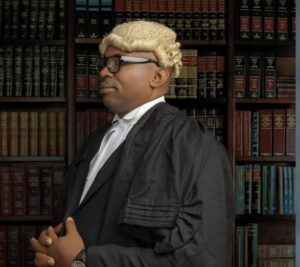
In this legal opinion, Douglas Ogbankwa, Esq., examines the constitutional requirements for the composition of State Houses of Assembly and the legal implications of suspending elected lawmakers.
Section 90 of the 1999 Constitution provides for the establishment of a House of Assembly in each state of the Federation.
Section 91 further provides for the composition of each House, stating that it shall consist of three or four times the number of seats allocated to the state in the House of Representatives, divided, as far as possible, to reflect nearly equal population. It also stipulates that a State House of Assembly must have not fewer than 24 and not more than 40 members.
Ogbankwa argues that these constitutional provisions impose mandatory requirements on the composition of State Houses of Assembly. He maintains that the use of the word “shall” indicates a compulsory constitutional obligation that cannot be disregarded.
He relies on the decision in PDP v. Taiwo & Ors. (2004) 8 NWLR (Pt. 876) 656 in support of his position on the mandatory interpretation of the word.
According to him, any legislative arrangement that falls below the constitutional minimum raises serious questions about the validity of the House’s constitution and the decisions taken by it.
The article further examines the power of a State House of Assembly to suspend one of its members and the legal limits governing the exercise of such authority.
Ogbankwa explains that, in the past, the duration of legislative suspensions was often determined by the applicable laws and standing rules of individual legislative houses.
He cites the case involving former Edo State lawmaker, Zakawanu Garuba, in which the National Industrial Court considered the legality of an indefinite suspension under Section 31(2) of the Legislative Houses (Powers and Privileges) Law of defunct Bendel State, applicable to Edo State.
In the judgment, the court held that the House’s suspension power was limited by the applicable law and that the indefinite suspension imposed on the claimant could not be justified by the provisions before the court.
The court also found that the lawmaker was unlawfully prevented from participating in legislative proceedings after the suspension had elapsed by operation of law.
Ogbankwa identifies the Court of Appeal’s decision in Speaker, Bauchi State House of Assembly v. Hon. Rifkatu Samson Danna (2017) 49 W.R.N. as a significant judicial authority on the suspension of elected legislators.
The case concerned Rifkatu Samson Danna, a member of the Bauchi State House of Assembly, who challenged her indefinite suspension by the legislature.
According to Ogbankwa, the Court of Appeal upheld the position that an elected legislator is not an employee of the House and that the suspension of an elected representative raises constitutional concerns because it deprives the affected constituency of representation.
He also draws attention to the court’s position on the payment of salaries and allowances, arguing that a legislative house cannot arbitrarily interfere with the financial entitlements of an elected member.
The article further references Section 111 of the Constitution, which deals with the remuneration of members of State Houses of Assembly, and argues that the determination of such remuneration is not within the unilateral discretion of the Speaker or other legislative officials.
Ogbankwa maintains that the suspension of elected lawmakers, particularly where it is indefinite, undermines the right of constituents to representation and creates room for what he describes as the tyranny of the majority over elected minority members.
The legal practitioner argues that legislative houses must exercise their powers within the limits of the Constitution, applicable statutes and judicial decisions.
He maintains that the fact that a legislative majority supports a particular decision does not automatically make that decision lawful.
According to him, elected lawmakers hold their mandates through the electorate and should not be subjected to arbitrary disciplinary measures that undermine their constitutional responsibilities.
He therefore calls on State Houses of Assembly across the country to respect constitutional provisions, protect the rights of elected representatives and ensure that their internal procedures remain consistent with the law.
Concluding his position, Ogbankwa emphasises the importance of building strong democratic institutions through respect for the rule of law.
He writes:
“If you protected the rule of law while in office, the rule of law will protect you while you are out of office.”
About the Author
Douglas Ogbankwa, Esq., is a Nigerian legal practitioner, writer and policy analyst. He is a former Publicity Secretary of the Nigerian Bar Association, Benin Branch, Convener of Vanguard for the Independence of the Judiciary and Convener of the Security Situation Room.