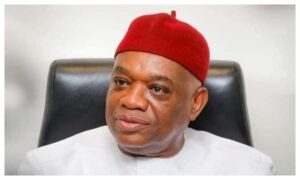
Calls for the replacement of the Chairman of the Independent National Electoral Commission (INEC), Professor Joash Ojo Amupitan, with Professor Nnenna Nnannaya-Oti have emerged on social media amid concerns over the credibility of the electoral body ahead of the 2027 general elections.
Some social media users have urged President Bola Ahmed Tinubu to consider appointing Nnannaya-Oti, who served as INEC’s Returning Officer for the 2023 Abia State governorship election, citing her handling of the disputed results collation in the state.
The calls come against the backdrop of public concerns over irregularities reported in INEC’s preliminary voters’ register, including suspected artificial intelligence-generated photographs, duplicate entries and records of deceased persons.
The controversy has attracted criticism from members of the public, who have questioned the commission’s data management and the safeguards in place to protect the credibility of the electoral process.
However, INEC has acknowledged the concerns and said it was investigating the irregularities. On November 9, 2026, Amupitan announced that the commission had removed 1,608,660 invalid voter registrations following its review and identified 54 officials across 10 states for possible disciplinary action or prosecution.
Supporters of Nnannaya-Oti have pointed to her role in the 2023 Abia governorship election, when the collation process was suspended following controversy surrounding results from Obingwa Local Government Area.
At the resumption of collation, she insisted that the results must comply with INEC’s procedures and that the number of votes recorded should not exceed the number of accredited voters.
The Labour Party candidate, Alex Otti, was subsequently declared winner with 175,467 votes, defeating his closest rival, Okey Ahiwe of the Peoples Democratic Party, who scored 88,529 votes.
Her handling of the process earned her recognition among supporters of electoral transparency, with some Nigerians now arguing that her experience and conduct during the Abia election make her suitable for a national electoral leadership role.
Those calling for Amupitan’s replacement have also raised allegations of political bias and questioned the commission’s ability to guarantee a level playing field in 2027. However, the allegations of partisanship and claims that the chairman is working with the ruling party to influence the outcome of the next election have not been independently established.
As the debate continues, attention is likely to remain on INEC’s efforts to address concerns surrounding the voters’ register and demonstrate transparency in preparations for the 2027 elections.