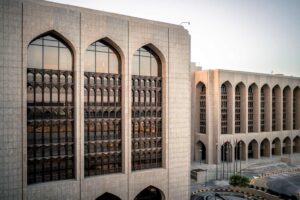
The Central Bank of the United Arab Emirates has moved to calm investors and residents, insisting the country’s financial system remains stable despite recent Iranian missile and drone strikes that shook markets and tested Dubai and Abu Dhabi’s safe‑haven status.
The regulator said the UAE’s banking and financial sector is “resilient, strong and stable,” pointing to a capital adequacy ratio of about 17% and a liquidity coverage ratio above 146%, both comfortably above international regulatory minimums. Total banking and financial sector assets have surpassed 5.42 trillion dirhams (around 1.48 trillion dollars), underlining what officials describe as a solid balance‑sheet buffer against regional shocks.
Banks, payment systems and other key financial infrastructure are operating normally and continue to provide services without disruption, the central bank said, stressing that institutions have robust risk‑management and business‑continuity plans aligned with global standards. The assurances came as the Abu Dhabi Securities Exchange and Dubai Financial Market reopened following a rare two‑day suspension ordered after Iran’s attacks, with trading resuming under temporary 5% limit‑down bands to contain volatility.
Authorities acknowledged, however, that the broader economic backdrop remains fragile, with the strikes and market shutdown unnerving some foreign investors and raising questions about Dubai’s long‑cultivated image as a secure regional hub. Analysts also warn that higher oil prices and renewed geopolitical risk could complicate the interest‑rate outlook for the UAE, whose dirham is pegged to the U.S. dollar and therefore closely tracks Federal Reserve policy, potentially prolonging elevated borrowing costs for businesses and households.