There are moments in public life when politics ceases to be merely a contest of ideas and becomes something closer to theatre; dramatic, unpredictable, and brutally unforgiving.
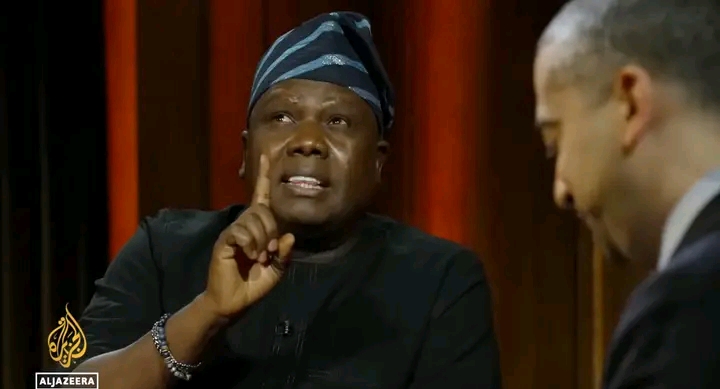
The recent encounter between Daniel Bwala and Mehdi Hasan on Al Jazeera’s Head to Head was one such moment, a spectacle that has since ricocheted across Nigeria’s social media space like a political thunderclap.
And after watching the interview carefully, I must confess something that may sound unusual in the middle of the online frenzy: I have sympathy for Daniel Bwala. Not because the interview was easy for him.
But precisely because it was not.
Entering the Lion’s Den
Anyone who knows Mehdi Hasan understands that appearing across the table from him is never a casual media engagement. Hasan is not merely an interviewer; he is a prosecutor of narratives. His style is relentless, forensic, and unapologetically confrontational.
When Daniel Bwala accepted the invitation to appear on Head to Head, he was effectively stepping into one of the most intellectually combative arenas in modern television journalism.
It would be naïve to assume he came unprepared. Bwala likely studied Hasan’s previous interviews. He must have reviewed the typical lines of attack, the rhythm of the questioning, and the traps that often await public officials who sit across that famous semicircular table.
Like a political gladiator, he probably armed himself with arguments about the reforms and policies of his principal, Bola Ahmed Tinubu.
His mission was simple in theory: defend the administration. But politics rarely unfolds according to theory.
The Blow That Changed the Battle
Mehdi Hasan came prepared as well.
Preparation is the oxygen of his craft. Before every interview, he studies his subject with almost prosecutorial diligence. In the case of Bwala, it did not take long for Hasan to stumble upon something irresistible: Bwala’s past statements about President Tinubu when he belonged to the opposition. And that is where the interview changed direction.
Rather than allowing Bwala to remain comfortably on the terrain of defending government policy, Hasan dragged him onto a far more treacherous battlefield, his own political history.
It was a strategic ambush.
One moment the discussion appeared to be about governance. The next moment it became an interrogation of consistency, loyalty, and political transformation.
Hasan knew exactly what he was doing.
He seized control of the narrative from the very first minute of the interview and never surrendered it until the final seconds of the nearly fifty-minute exchange. It was journalism executed with surgical aggression.
A Man Under Fire
Yet here is where my sympathy for Daniel Bwala emerges.
Because once that ambush began, he had only two options:
Retreat.
Fight.
He chose to fight.
In his own words afterward, Bwala made it clear that avoiding interviews was never an option for him. When he accepted the role of presidential spokesperson, he understood that the job was not about applause or comfort.
It was about defending the administration anywhere, anytime, before anyone.
He even pointed out that the interview invitation had initially been framed around issues such as security, the economy, and corruption, not a forensic excavation of his past political statements.
But television debates do not obey written invitations.
They obey the instincts of the interviewer.
And Mehdi Hasan followed his instincts.
The Unforgiving Memory of Politics
If there is one lesson that emerged from this encounter, it is this:
Politics never forgets.
Every speech, every tweet, every television appearance, they all remain archived in the unforgiving memory of the digital age.
And one day, unexpectedly, those words may return.
Often with devastating force.
This is why the recklessness that frequently characterises political rhetoric in opposition can become a dangerous trap. Many politicians speak in the heat of partisan battles without restraint, believing the words of today will disappear with the news cycle of tomorrow.
But tomorrow has a habit of resurrecting yesterday.
The statements shouted in opposition can become the chains that bind you when circumstances change.
Daniel Bwala’s experience on Head to Head illustrates this reality with brutal clarity. Words spoken in the past returned to confront the man who once spoke them. And they returned on one of the most unforgiving platforms in global television journalism.
Courage in the Arena
Critics have spent the past twenty-four hours mocking the encounter. Social media, as usual, has turned the interview into a carnival of memes, selective clips, and partisan interpretation.
But behind the noise lies an uncomfortable truth.
Many of those laughing would never dare to sit where Daniel Bwala sat.
Facing Mehdi Hasan on international television is not a comfortable assignment. It is closer to intellectual combat.
Yet Bwala did not run from it. He endured the interrogation. He defended his government. And he stayed in the arena until the very end. That alone deserves acknowledgement.
Not many political spokespersons would have survived such an onslaught without completely collapsing under pressure.
Politics, Loyalty, and Reality
Bwala himself addressed the criticism with a calm political realism.
He noted that political transitions are not unusual. Around the world, people who once opposed leaders later serve in their administrations. He cited the example of former critics who later joined the government of Donald Trump, a reminder that politics is rarely a straight line.
In Nigeria as well, alliances shift, ideologies evolve, and yesterday’s opponents often become today’s partners.
President Tinubu, by many accounts, understands this reality better than most.
Politics is not theology.
It is strategy.
The Real Lesson
But beyond the personalities involved, this episode offers a deeper lesson for Nigerian politicians. Words matter.
In opposition, many politicians treat public statements as weapons of destruction, exaggerating accusations, deploying reckless language, and launching personal attacks without considering future consequences.
Yet politics is a revolving door.
The same individuals who insult a leader today may serve in that leader’s government tomorrow.
And when that day comes, the internet will remember everything.
The speeches will still exist. The clips will still circulate. And journalists like Mehdi Hasan will be waiting.
The Final Verdict
So yes, my sympathy goes to Daniel Bwala. Not because he won the interview. Not because he lost it. But because he stood his ground in one of the most demanding interview formats in modern media and endured a relentless interrogation that many seasoned politicians would have avoided altogether.
He walked into the lion’s den. And he walked out alive.
In politics, sometimes survival itself is victory.
And if Nigerian politicians are wise, they will look beyond the social-media laughter and absorb the real message hidden inside that dramatic television encounter: In politics, the words you speak today may become the questions you must answer tomorrow.
Tooki is a communications strategist, founder at BusinessWorld Newspaper and currently the special adviser to the national chairman of APC (media and communications strategy).
Views expressed by columnists are strictly personal and not that of MUKTV