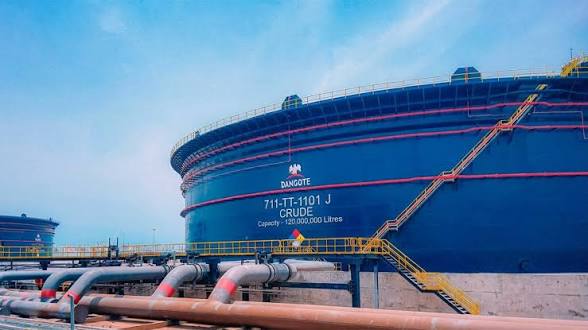
Dangote Petroleum Refinery and Petrochemicals has rapidly transformed from a massive industrial project into a critical ‘fuel lifeline’ for nations scrambling to keep their economies moving.
According to a report by Bloomberg on Friday, several African governments, most notably South Africa, have begun aggressive outreach to the 650,000-barrel-per-day facility. The refinery is seeing a significant surge in inquiries as traditional supply routes from the Middle East face unprecedented disruptions.
As the geopolitical landscape shifts under the weight of the ongoing US-Israel war on Iran, the African continent is recalibrating its energy dependency.
For years, the global oil market was dictated by the bottom line. However, the current conflict has fundamentally altered the priorities of sovereign states. Energy security has now overtaken market rates as the primary driver for procurement.
“Right now, it is not about pricing; it’s about availability. I think the situation will continue for a while,” the Chairman of the Dangote Group, Aliko Dangote, stated in a recent interview with The Economist.
This sentiment is echoed across the continent. With the flow of refined products from the Middle East increasingly volatile, the proximity and capacity of the Lagos-based refinery offer a buffer that was previously non-existent.
South Africa, one of the continent’s largest energy consumers, is among the first to formally signal its intent to diversify its sources. The government is moving to mitigate the risks associated with instability in the Persian Gulf by looking toward West Africa.