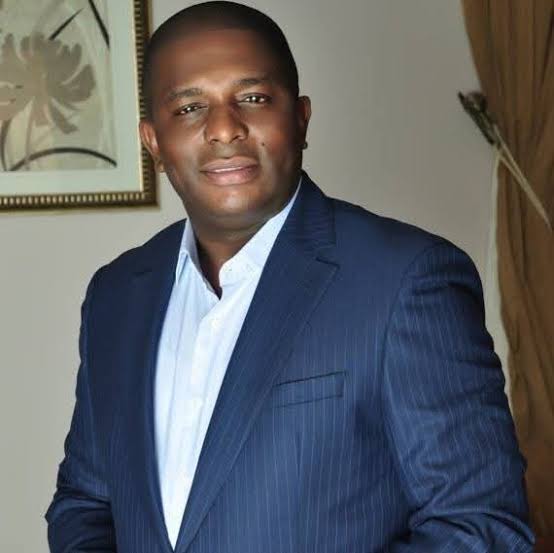
At moments when politics leans dangerously toward division, it often takes restraint, not rhetoric, to restore balance. That is the space Mascot Uzor Kalu has stepped into, establishing himself not merely as a participant in Abia’s political contest, but as a moderating voice at a critical time.
Recent rift between former Governor Orji Uzor Kalu and Deputy Speaker Benjamin Okezie Kalu threatened to deepen existing fault lines within the All Progressives Congress (APC) in Abia State. In many political environments, such moments escalate quickly, triggered by loyalists, amplified by rhetoric, and hardened by pride. Yet, what emerged instead was a different approach: a call for calm, reflection, and reconciliation.
Anchored by the enduring idea that peace transcends the mere absence of conflict, Mascot Kalu’s intervention reflects a deliberate leadership style—measured, composed, and conscious of the broader implications of political discord. His message urging supporters to “sheathe their swords” was not just symbolic; it was a strategic appeal to de-escalate tensions before they calcify into lasting divisions.
More telling, however, is his decision to move beyond words. By reaching out to elders and stakeholders in Bende Local Government Area, he signals an understanding that in Nigerian political culture, durable peace is often negotiated within traditional and communal frameworks. It is a recognition that influence does not reside solely in formal institutions, but also in the moral authority of community leaders.
There is also a subtle but important shift in emphasis within his message—one that reframes politics through the lens of relationship rather than rivalry. By highlighting family ties and longstanding bonds, he introduces a human dimension often lost in partisan struggles. In doing so, he reminds political actors that today’s opponent may still be tomorrow’s ally, and that the cost of burnt bridges is often higher than the gains of temporary victory.
Equally significant is his insistence on ending the cycle of insults and hostile exchanges. Political discourse, especially in moments of tension, can quickly descend into toxicity. Calling for civility is not merely about decorum; it is about preserving the integrity of the political process itself.
In the final analysis, Mascot Kalu’s conduct offers a study in contrast. Where others might see advantage in discord, he appears to see risk. Where tension invites escalation, he opts for de-escalation. And where politics often rewards noise, he leans into quiet influence.
Whether this approach ultimately reshapes the trajectory of Abia APC politics remains to be seen. But in a climate where division can be easily amplified, the willingness to pursue peace—deliberately and thoughtfully—may prove to be its own form of political strength.