The Ebonyi State Government has intensified efforts to tackle chronic water scarcity across the state, with the administration of Governor Francis Nwifuru embarking on the rehabilitation of long-abandoned water projects and expanding reticulation to major commercial centres and public facilities.
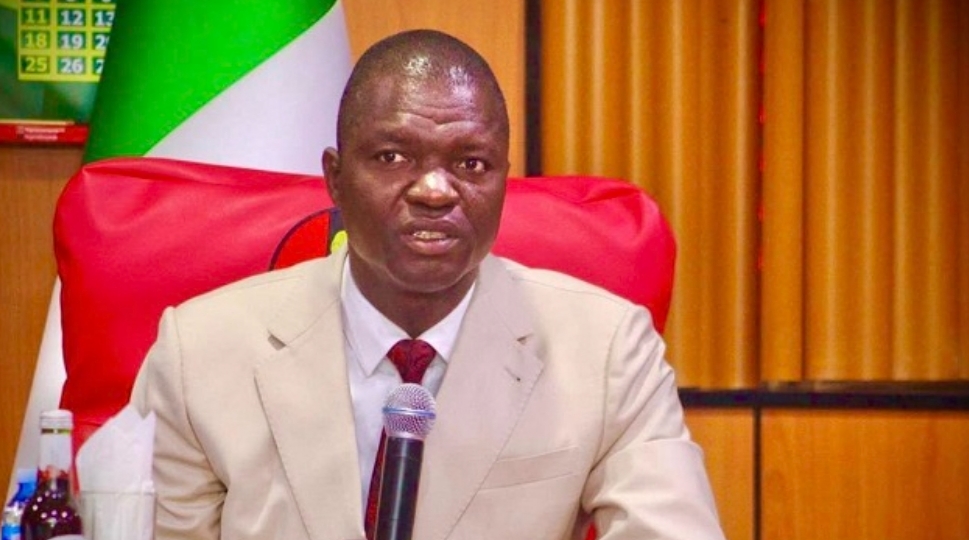
The State Commissioner for Water Resources, Victor Chukwu, disclosed this during a press briefing in Abakaliki, where he outlined ongoing interventions to restore critical water infrastructure across the state.
Chukwu said substantial government funds had been committed to reviving water projects that had remained dormant for years, with the multi-billion-naira Oferekpe Water Scheme receiving particular attention.
According to the commissioner, more than ₦16 billion had been spent on the Oferekpe project as of 2013, but the facility was subsequently left unused for years.
He said the present administration had chosen to rehabilitate the existing infrastructure rather than abandon it and embark on another costly project.
The commissioner also disclosed that the Ezillo and Old Abakaliki water schemes had been reactivated as part of the state government’s efforts to improve water supply.
He said the Ezillo Water Scheme was already operational and pumping water to parts of Abakaliki, although the full restoration of water supply across the state capital was being hampered by ageing pipelines, leakages and vandalism resulting from years of disuse.
“Currently, Ezillo Water Scheme is in full operation. Water comes into the city,” Chukwu said, noting that maintenance challenges, particularly rust and leakages along the pipeline network, remained.
On the Oferekpe scheme, the commissioner explained that engineers were waiting for the dry season to address an obstruction affecting the flow of raw water into the central reservoir.
Similar challenges, he said, were affecting the Old Abakaliki Water Scheme, where urban development had disrupted connections between the low-lift and high-lift systems, while years of equipment cannibalisation had further affected the facility.
Chukwu said the Nwifuru administration had adopted a policy of continuity by rehabilitating existing infrastructure instead of abandoning projects initiated by previous administrations.
He said funds had already been released for electromechanical repairs, the procurement of water-treatment materials and completion of structural works.
The commissioner stressed that government should operate as a continuum, warning against the practice of abandoning critical infrastructure inherited from previous administrations to commence entirely new projects.
He argued that constructing a facility comparable to the Oferekpe Water Scheme under current economic conditions would require significantly more resources, making rehabilitation a more practical and cost-effective option for the state.
Beyond residential water supply, Chukwu disclosed that the Ministry of Water Resources was extending reticulation pipelines to major commercial centres, including the Abakaliki International Market.
He said the state government’s objective was to ensure that populated public places across Ebonyi had access to direct water supply.
The commissioner added that the reticulation programme would be expanded to rural communities in the coming months as the government works towards improving access to potable water across the state.
Chukwu also dismissed concerns that Ebonyi could not provide clean and reliable water, saying the ongoing investment in the sector demonstrated the government’s commitment to addressing existing infrastructural gaps.
He acknowledged that ageing infrastructure and vandalism remained major challenges but urged stakeholders to avoid politicising basic utilities.
The commissioner expressed optimism that the ongoing rehabilitation and expansion projects would significantly improve water availability across Ebonyi State in the months ahead.