Iran’s Supreme National Security Council, led by security chief Mohammad Baqer Zolqadr, has reportedly concluded that nationwide anti-regime protests could resume within days as the economy rapidly deteriorates under a U.S. naval blockade, with internal assessments warning the country may only withstand another 6 to 8 weeks of pressure.
Iran International, citing informed sources, reports that senior security and economic officials briefed the council that mounting economic distress has become the primary driver of potential unrest, eclipsing purely political or ideological grievances. The assessment warns that shortages, soaring inflation, and collapsing business activity are converging to create what officials described as a combustible social environment.
According to the internal forecast, Iran’s economy may only be able to endure another six to eight weeks of the U.S.-led naval blockade before critical pressure points are reached. By the end of spring, up to 2 million private sector jobs could be lost as factories, service providers, and small businesses struggle to operate under disrupted trade and supply chains. Officials reportedly cautioned that such job losses would deepen poverty and fuel anger among already hard‑pressed households.
Security agencies are said to have concluded that renewed unrest is no longer a question of “if” but “when,” describing protests as “inevitable” given the current trajectory. The council’s internal warning reportedly frames the next few weeks as critical, with fears that any additional economic shock, subsidy cuts, or price spikes could act as an immediate spark.
The reported assessment comes as Iran continues to grapple with war damage, stringent sanctions, and the impact of maritime restrictions on its oil exports and imports of key goods. Economic projections shared with the leadership have suggested that rebuilding the war‑hit economy could take more than a decade, while inflation and unemployment are expected to rise sharply if the blockade persists.
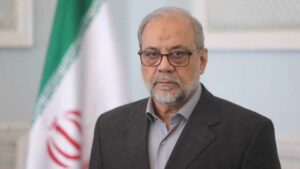
Mohammad Baqer Zolqadr, a veteran Revolutionary Guard commander recently appointed as secretary of the Supreme National Security Council, is overseeing these deliberations at a time of deepening friction between President Masoud Pezeshkian’s government and senior IRGC figures over the management of the war and its economic fallout. According to these reports, security planners now see social stability as increasingly fragile, with only the exact timing and scale of the next wave of protests remaining uncertain.