Nigeria’s electricity sector has received at least $3.653bn in World Bank-backed funding over the past 24 years, yet millions of households and businesses across the country continue to grapple with unstable power supply, frequent grid collapses, and heavy reliance on generators.
An analysis of World Bank-supported power projects between 2001 and 2024 showed that successive interventions targeted transmission upgrades, sector reforms, rural electrification, renewable energy expansion, and recovery programmes aimed at stabilising the country’s troubled electricity industry.
According to data from the World Bank, as reported by Statisense, the projects include the $100m Transmission Development Project introduced in 2001, the $172m National Energy Development Project in 2005, and the $400m Nigeria Electricity and Gas Improvement Project launched in 2009.
Others are the $145m Nigeria Power Sector Guarantees Project in 2014, the $486m Nigeria Electricity Transmission Project in 2018, the $350m Nigeria Electrification Project also in 2018, the $750m Power Sector Recovery Programme approved in 2020, the $750m Distributed Access through Renewable Energy Scale-up programme introduced in 2023, and the $500m Sustainable Power and Irrigation for Nigeria project launched in 2024.
The cumulative funding from the projects totals about $3.653bn, excluding regional interconnector and hydro rehabilitation projects for which no exact figures were stated. Despite the multi-billion-dollar interventions, Nigeria’s electricity supply has remained inadequate for its growing population and industrial demand.
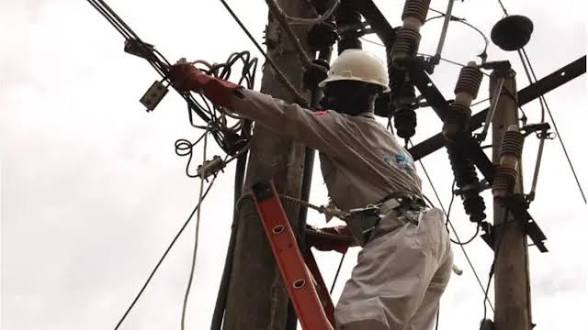
The national grid has continued to suffer repeated collapses, while power generation has largely hovered below expectations for Africa’s most populous country. Many households and businesses still depend heavily on petrol and diesel generators due to unreliable supply from distribution companies.
Industry experts have repeatedly blamed the crisis on weak transmission infrastructure, liquidity shortfalls in the power market, gas supply constraints, vandalism, inadequate investment, and policy inconsistencies.