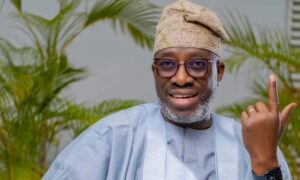
Former lawmaker and African Democratic Congress (ADC) chieftain, Nnenna Ukeje, has opened up on why she refused to support President Bola Ahmed Tinubu in the 2023 presidential election despite once admiring his political leadership in Lagos State.
Speaking during a recent interview, Ukeje said she grew up respecting Tinubu’s political influence, especially his role as a strong opposition figure during the administration of former President Olusegun Obasanjo.
According to her, Tinubu also earned national admiration through the transformation of Lagos State, with policies later sustained by former governor Babatunde Raji Fashola.
Ukeje explained that many Nigerians bought into Tinubu’s vision of Lagos as a “mini Nigeria,” believing he would replicate the same inclusive leadership style at the national level.
However, she said her expectations were shattered after he became president.
“I’m not angry, I’m disappointed,” she said, stressing that her disappointment came from the high hopes she had for the administration.
The former federal lawmaker stated that the current administration has reinforced her belief that “regional champions don’t necessarily make central champions.”
She accused the president of running an administration perceived by many as heavily dominated by loyalists from Lagos, claiming that the government often looks like “Lagos State in Abuja.”
Ukeje argued that one of the major criticisms against the Tinubu administration is its perceived lack of inclusiveness and broad national representation.
Explaining why she preferred former Vice President Atiku Abubakar during the 2023 election, Ukeje pointed to some of the experienced political figures around him, including David Mark and Aminu Waziri Tambuwal.
She described them as seasoned politicians with strong democratic credentials and a history of defending constitutional governance.
The ADC chieftain also pushed back against criticisms that Atiku failed to address terrorism challenges during previous administrations.
According to her, following the abduction of the Chibok schoolgirls, Atiku enrolled some of the rescued girls at the American University of Nigeria in Yola, a move she said directly challenged Boko Haram’s anti-Western education ideology while also giving the victims access to education and rehabilitation.