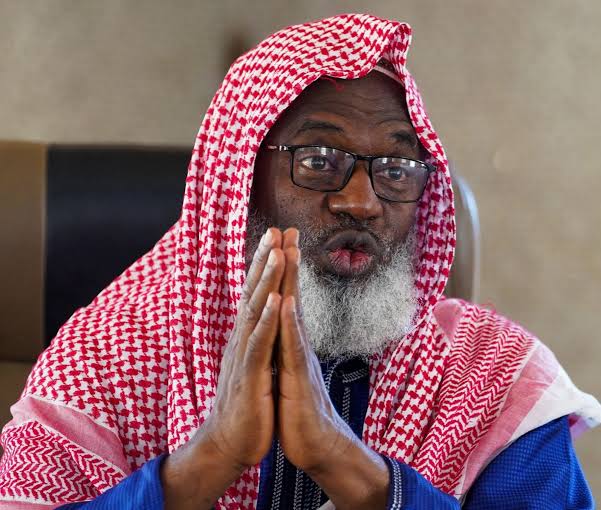
Popular Islamic cleric, Sheikh Ahmad Gumi, has defended his controversial visit to Ibadan, insisting that no individual or group has the authority to stop him from travelling to any part of Nigeria.
Gumi’s response comes amid renewed debate over his November 2025 visit to Oyo State, which sparked criticism from some quarters that alleged attempts to promote Northern Islamic ideologies in the South-West.
Breaking his silence in a Facebook post on Tuesday, the cleric clarified that he was not invited by any Muslim group or individual in the South-West. Rather, he said he attended the event as a representative of Northern Islamic scholars.
Addressing the backlash surrounding his visit, Gumi wrote:
“I quite understand now how Islamophobia is shaping politics in SW (South-West) and why I was unnecessarily dragged into their dirty local politics.
“I was in Ibadan, not by the invitation of any SW Muslim individual or group, but as a representative of the Coalition of Northern Muslim Ulama.
“Can anybody stop me from going anywhere in Nigeria?”
His comments came shortly after fresh controversy emerged over reports that kidnappers holding victims in Oyo State had allegedly demanded the implementation of Sharia law as a condition for their release.
However, one of the abducted victims, Mrs Rachael Alamu, Principal of Community High School, Esiele, dismissed the claim in a viral video from captivity. According to her, the abductors never requested the introduction of Sharia law or a N1 billion ransom, but instead sought the release of their associates currently in government custody.
The Muslim Rights Concern (MURIC) also rejected the Sharia claim, describing it as false and alleging that enemies of Islam inserted the narrative into the negotiations to discredit the religion.
Gumi’s remarks align with MURIC’s position, as he suggested that anti-Islam sentiments were influencing political discussions in the South-West.
The cleric’s visit to Ibadan took place on November 19, 2025, during the Southern Nigerian Ulama Summit held at the University of Ibadan, where he participated as a special guest and speaker alongside prominent Muslim scholars from both Northern and Southern Nigeria.