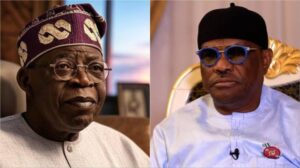
Leadership is rarely measured by the ease of decisions made during periods of stability. Rather, history often remembers leaders who demonstrate the courage to confront difficult realities and implement reforms aimed at securing long-term national progress. In contemporary Nigeria, President Bola Ahmed Tinubu’s administration has embarked on a series of far-reaching economic reforms that have generated both debate and scrutiny, but which underscore a willingness to address challenges that past governments largely deferred.
For decades, successive administrations acknowledged the structural deficiencies within Nigeria’s economy, yet many of the necessary corrective measures remained politically sensitive and were consequently postponed. The cumulative effect was an economy burdened by unsustainable fiscal practices, rising debt obligations, and heightened vulnerability to external economic shocks. Upon assuming office, President Tinubu inherited these longstanding challenges and chose the path of reform rather than continued postponement.
Among the most consequential policy decisions of the administration was the removal of fuel subsidy. Although the decision prompted immediate economic hardship and widespread public concern, it also confronted a system that had consumed vast public resources for years while delivering limited benefits to the broader population. The administration has consistently maintained that funds previously expended on subsidy payments can now be redirected toward critical sectors such as infrastructure, healthcare, education, and social investment programmes.
Equally noteworthy was the government’s decision to unify the foreign exchange market. For years, multiple exchange-rate windows created distortions within the economy, encouraged arbitrage, and weakened investor confidence. By pursuing exchange-rate reforms, the administration sought to enhance transparency, improve market efficiency, and create a more attractive environment for both local and foreign investors.
Critics of these reforms have understandably highlighted their short-term consequences, particularly the rising cost of living and increased pressure on households and businesses. Such concerns are valid and deserve careful consideration. However, major economic transformations rarely occur without temporary sacrifices. The ultimate assessment of these policies will depend not only on their immediate effects but also on their capacity to deliver sustainable growth, fiscal stability, and improved living standards over time.
Beyond economic restructuring, the Tinubu administration has also prioritised infrastructure development, local government autonomy, tax reforms, and initiatives designed to attract greater investment into the Nigerian economy. These efforts reflect a broader strategy aimed at strengthening institutions, expanding economic opportunities, and positioning Nigeria for long-term competitiveness in an increasingly interconnected global environment.
Nevertheless, no reform programme succeeds on policy announcements alone. Effective implementation remains essential. Government must continue to strengthen social safety nets, support small and medium-scale enterprises, boost agricultural productivity, and protect vulnerable citizens from the harsh realities that often accompany periods of economic transition. The success of any reform agenda ultimately depends on balancing economic necessity with social responsibility.
As Nigeria navigates a challenging economic landscape, history may ultimately judge President Tinubu not by the immediate popularity of his policies but by their enduring impact on national development. Whether one agrees with every aspect of the administration’s reform agenda or not, there is little doubt that it has demonstrated a willingness to confront issues many believed could no longer be postponed.
In governance, courage is not merely the ability to make decisions. It is the willingness to make necessary decisions in the face of uncertainty, with the conviction that long-term national interest must prevail over short-term political convenience. That remains the defining test of leadership, and one by which the Tinubu administration’s legacy will ultimately be measured.