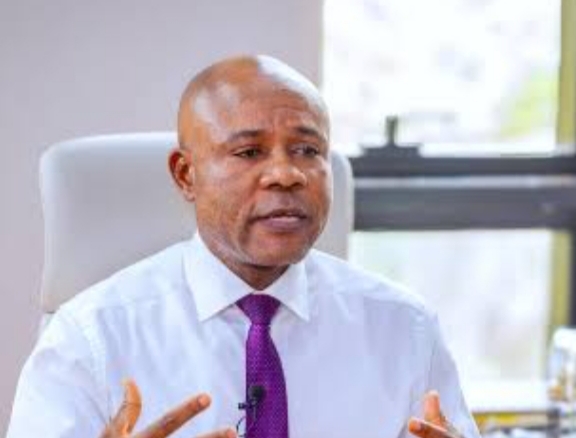
Enugu State Governor, Dr. Peter Mbah, has charged political appointees and civil servants to uphold the principles of transparency, accountability and traceability, warning that corruption and financial misconduct undermine development and deprive citizens of essential public services.
The governor gave the charge while declaring open a two-day training programme on Compliance with Anti-Corruption Policies and Financial Regulations Frameworks, organised for political office holders and civil servants in the state.
Represented by the Secretary to the State Government, Prof. Chidiebere Onyia, Governor Mbah said the training was designed to strengthen compliance with anti-corruption laws, financial regulations and emerging taxation policies while promoting ethical standards and good governance across the public service.
Speaking on the theme, “Enhancing Governance through Compliance: Navigating Anti-Corruption Policies, Financial Regulations and Emerging Taxation Frameworks,” the governor described corruption as one of the greatest obstacles to sustainable development.
According to him, every public fund lost through corruption, financial irregularities or non-compliance translates to fewer resources for critical projects such as smart schools, primary healthcare centres, roads and other essential infrastructure.
“Our administration is anchored on three core governance principles, transparency, traceability and accountability. These pillars continue to shape our procurement processes, e-governance initiatives and financial management systems,” Mbah said.
He urged public officers to remain updated on emerging tax and regulatory frameworks, stressing that ignorance of the law would no longer be accepted as an excuse for non-compliance.
The governor also encouraged participants to replicate the knowledge acquired during the training within their various Ministries, Departments and Agencies (MDAs), assuring that the government would continue to monitor compliance across the public service.
Delivering a presentation at the event, certified management trainer and retired Deputy Director of the Independent Corrupt Practices and Other Related Offences Commission (ICPC), Justin Kuatsea, said the fight against corruption requires collective responsibility and exemplary leadership.
He identified employment irregularities, recruitment fraud, contract inflation, concealment of official records, irregular promotions, payments for unexecuted contracts and other financial abuses as common forms of corruption within the public service.
Kuatsea maintained that the anti-corruption campaign must begin with individuals while political leaders demonstrate integrity through their actions.
Also speaking, the Managing Director and Chief Executive Officer of Xavine Consulting Limited, Catherine Kadiri, said the programme was designed to equip public officers with practical knowledge of anti-corruption frameworks, financial regulations and taxation laws.
She disclosed that 16 resource persons, including experts from the ICPC and Nigeria’s financial regulatory institutions, were engaged to expose participants to global best practices in governance, accountability and compliance.
Kadiri noted that building the efficient and ethical public service required to drive Governor Mbah’s vision of a $30 billion economy demands integrity, professionalism and strict adherence to financial regulations.