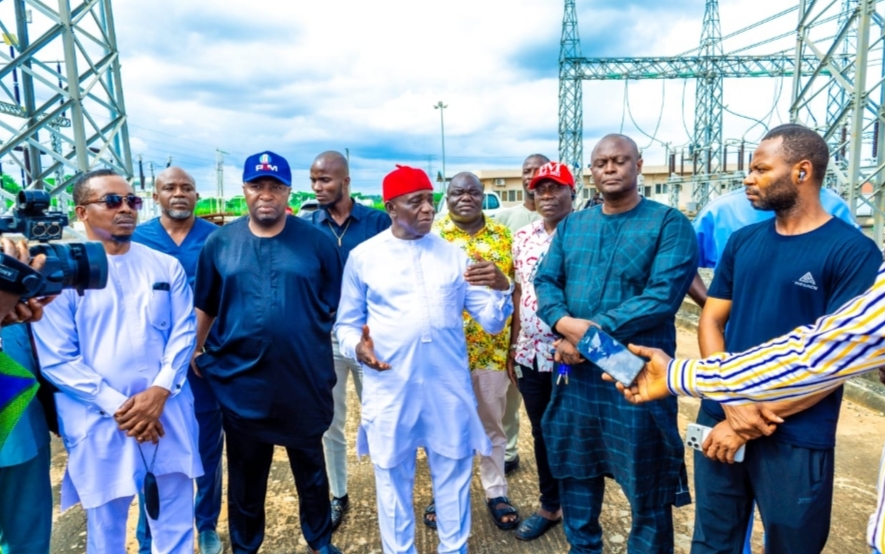
The Enugu State Government has commenced the construction of three new 33KV electricity feeders aimed at ending prolonged power outages and improving electricity supply to communities across four Local Government Areas of the state.
The project, being developed from the Transmission Company of Nigeria, TCN, station at Ugwuaji, is expected to improve power supply to Nkanu East, Nkanu West, Awgu and Aninri Local Government Areas.
The intervention is designed to address challenges associated with the Amechi 33KV feeder, which currently serves several communities across Enugu and extends for more than 600 kilometres into parts of Ebonyi State.
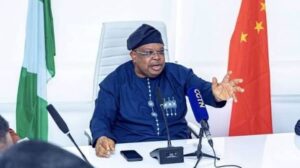
Speaking at a stakeholders’ meeting on electricity in Enugu, the Managing Director and Chief Executive Officer of the Enugu State Electrification Agency, ESEA, Engr. Christopher Ezeoha, said the government opted to restructure the network rather than continue repairing the existing feeder.
According to him, two new 33KV feeders will be constructed from the Ugwuaji TCN station, while an existing short feeder will also be extended, bringing the total to three feeders.
He said the new infrastructure would be dedicated largely to Nkanu East and Nkanu West, while the existing Amechi feeder would be reconfigured to serve Awgu and Aninri.
The state government will also construct four new injection substations in Nkanu East and Nkanu West to strengthen the distribution network by transforming electricity from 33KV to 11KV.
Ezeoha disclosed that some communities, including Nkerifi, Nara and Mburubu, have reportedly been without electricity for more than 20 years.
He said the new network would reduce the length of individual feeders, making it easier to detect faults and carry out repairs.
The ESEA boss said the government was targeting an average of more than 20 hours of electricity supply daily upon completion of the project.
He added that the intervention forms part of Governor Peter Mbah’s broader plan to establish a modern and commercially viable electricity market in Enugu State.
According to him, the government also plans to introduce smart prepaid meters and automation technology, including a Supervisory Control and Data Acquisition, SCADA, system, to improve accountability, revenue collection and fault detection.
Ezeoha further disclosed that the state was preparing its distribution network to evacuate electricity from a proposed 630-megawatt power generation facility being developed in Enugu.
He said the long-term objective of the administration was to achieve 24 hour electricity supply across the state, stressing that reliable distribution infrastructure would be critical to achieving the target.
The State Commissioner for Energy, Mr. Enyinna Ogbonna, described electricity as a major priority of the administration, noting that stable power supply was essential to industrialisation, job creation and economic growth.
He said the government’s electricity investments were part of its wider economic development agenda, including the plan to grow the state’s Gross Domestic Product from about 4.4 billion dollars to 30 billion dollars.
Also speaking, the General Manager of the TCN Enugu Region, Dr. Tom Inugonum, commended the state government’s efforts to improve electricity supply and called for stronger collaboration between the state and transmission authorities.
He noted that some transmission and substation projects in the region remained incomplete, while also expressing concern over the vandalism of electricity infrastructure.
The President General of Isi-Amagunze, Mr. Okey Nwatu, urged communities to take ownership of electricity infrastructure and protect transformers, cables, switches and other facilities from vandalism.
The state government said similar electricity infrastructure projects would be extended to other parts of Enugu, including Nsukka and Uzo-Uwani, as part of efforts to transform power supply across the state.