Journalists in Akwa Ibom State have been equipped with new investigative skills to trace illicit financial flows and expose financial practices capable of depriving government and citizens of resources required for development.
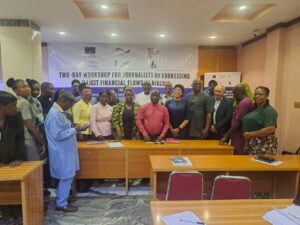
The capacity-building workshop, which brought together journalists, Civil Society Organisations, financial intelligence experts and law-enforcement agencies in Uyo, focused on strengthening the media’s capacity to contribute to the fight against illicit financial flows, IFFs, in Nigeria.
Organised by the Africa Network for Environment and Economic Justice, ANEEJ, with support from the European Union through the SecFin Africa Programme, the two-day workshop provided participants with practical knowledge on the nature and channels of illicit financial flows, financial investigations, money laundering, beneficial ownership, access to public information, data-driven journalism, digital security and the tracking and recovery of illicit assets.
The workshop assumed added significance against the backdrop of growing sophistication in the methods used to conceal, transfer and launder illicit funds across jurisdictions.
According to the United Nations Conference on Trade and Development, UNCTAD, illicit financial flows can arise from corruption, illegal markets, tax and commercial practices, exploitation and financing of crime and terrorism. They can move through financial transactions, trade transactions and physical movement of value across borders.
For Nigeria, the issue is particularly important because every naira lost through financial leakages represents resources that could otherwise support infrastructure, healthcare, education, job creation and social services.
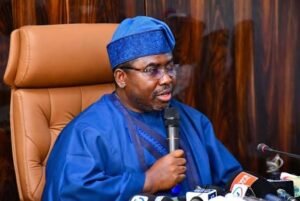
Speaking at the workshop, Executive Director of ANEEJ, Rev. David Ugolor, said illicit financial flows remained one of the persistent obstacles to Nigeria’s development, noting that resources meant to improve citizens’ welfare were often diverted through corruption, money laundering, tax evasion, trade misinvoicing, procurement fraud, profit shifting and other illicit practices.
Rev. Ugolor said the consequences of IFFs should not be measured only in financial figures, but also in the schools not built, hospitals left unequipped, roads not completed and opportunities denied to citizens.
He stressed that the ultimate cost was borne by ordinary Nigerians through weakened institutions, reduced public services, deepening poverty and declining confidence in government.
UNCTAD similarly notes that IFFs drain resources from development, erode the tax base and discourage public and private investment, thereby obstructing inclusive economic recovery and sustainable development.
The organisation estimates that Africa loses about 88.6 billion dollars annually through illicit capital flight, while countries experiencing high levels of IFFs have been found to spend considerably less on health and education.
For a state such as Akwa Ibom, where government expenditure is heavily directed towards infrastructure, healthcare, education, human-capital development and social intervention, experts say plugging financial leakages is therefore not merely a law-enforcement responsibility but a development necessity.
Media as financial watchdog
One of the major lessons from the workshop was the strategic role of the media in following the money.
Rev. Ugolor observed that government agencies and laws alone could not guarantee accountability, stressing that the anti-IFF framework required active citizen engagement, informed public scrutiny and an independent and knowledgeable press.
He said journalists had historically played a critical role in exposing corruption, uncovering hidden financial transactions and holding powerful individuals and institutions accountable.
According to him, the terrain has, however, changed, requiring journalists to understand complex issues such as beneficial ownership, digital transactions, cross-border financial networks and emerging technologies used to conceal illicit wealth.
The Director/Chief Executive Officer of the Nigerian Financial Intelligence Unit, NFIU, Hajia Hafsat Bakari, represented by the Head Strategic Communications, Mrs Aisha Bantam, echoed the position, describing the media as an important accountability mechanism in the fight against illicit financial flows.
Hajia Bakari noted that as financial transactions become increasingly complex and technology-driven, responsible reporting requires deeper understanding of financial systems and the ability to distinguish evidence from speculation.
Hajia Bakari also pointed to Nigeria’s preparations for its 2027 Financial Action Task Force, FATF, mutual evaluation, saying the media’s role would become even more important in promoting public understanding of financial integrity, governance and accountability.
NFIU’s strategic roadmap for the 2027 assessment places emphasis on demonstrating practical effectiveness rather than merely having laws and policies on paper.
Nigeria has also made significant progress internationally, having been removed from the FATF list of jurisdictions under increased monitoring in October 2025. The FATF nevertheless expects continued strengthening of Nigeria’s anti-money-laundering and counter-terrorist-financing system.
EFCC: journalists cannot afford to look away
The Economic and Financial Crimes Commission, EFCC, also described illicit financial flows as a serious threat to Nigeria’s economic development, public trust and institutional strength.
Representing the Commission, the Head of its Public Affairs Department Uyo zone, Mrs Theresa Nwosu, said the scale of financial crimes encountered by law-enforcement agencies was disturbing, adding that illicit financial flows could not be tackled by the EFCC or other government agencies alone.
She urged journalists to remain vigilant, investigate suspicious transactions and help create public awareness on the consequences of financial crimes.
According to her, the EFCC’s responsibility goes beyond investigation, arrest and prosecution to prevention, including educating young people about the consequences of financial crimes.
Mrs Nwosu described the media as a vital partner because journalists can uncover hidden transactions and networks, bring suspected wrongdoing into public view and prompt appropriate authorities to act.
She said informed citizens were more likely to demand accountability and support anti-corruption measures.
From event reporting to “follow-the-money” journalism
For the journalists who participated in the training, perhaps the most important outcome was the shift from merely reporting allegations to investigating the financial trail behind them.
One of the participants, Bassey Anthony, said the workshop had opened his eyes to the different channels through which illicit funds are moved within Nigeria and across international borders.
He said the knowledge had imposed a responsibility on journalists to track such funds, report their movement and contribute to efforts to recover money taken illegally out of the country.
Another participant, Michael Ufot, said the training had broadened his knowledge of the tools required for financial investigations and helped him understand where to obtain information when investigating illicit financial flows.
For Iniabasi Umoh, the training filled an important gap in her investigative journalism practice.
She said that before the workshop, she lacked sufficient knowledge on how to undertake financially related investigations, but had now acquired knowledge of relevant sources, how to obtain information and how to track evidence.
The testimonies underline one of the workshop’s central lessons: investigative journalism on illicit financial flows cannot rely on allegations, rumours or political claims; it must be built around documents, financial records, procurement information, corporate ownership structures, court records and corroborated evidence.
Rev. Ugolor reinforced this point, warning journalists against simply alleging that a government official or contractor “stole money” without evidence.
He urged journalists to develop the habit of following suspicious transactions through documentary evidence and relevant institutions.
What this means for Akwa Ibom
The workshop provided an opportunity for journalists in Akwa Ibom to move the discussion from the general concept of IFFs to specific sectors where public money moves.
The workshop also demonstrated that illicit financial flows are rarely confined to one location.
Philippe Pacaud, a former French Gendarmerie colonel with international investigative experience, stressed the importance of cooperation between journalists, civil society organisations, government institutions and financial intelligence agencies.
He noted that journalists need access to information while institutions need the media to help bring matters of public interest to light.
This is particularly important because illicit financial flows may involve several jurisdictions: money generated in Nigeria can be transferred through intermediaries, companies, bank accounts or assets in other countries.
Consequently, effective investigations may require collaboration with financial intelligence units, anti-corruption agencies, corporate registries, procurement authorities, banks, regulators, international investigative networks and journalists in other jurisdictions.
The way forward
The workshop should therefore not end with the closing of the training room.
The immediate challenge is to translate the knowledge acquired into sustained public-interest investigations.
Media organisations need to support journalists with time, editorial backing, data resources, legal guidance and digital-security tools to undertake complex financial investigations.
The media should also develop specialist reporting teams or networks capable of working on financial crime, procurement, tax, corporate ownership and asset recovery stories.
Government institutions, on their part, should improve access to public records and respond to legitimate media enquiries without unnecessary obstruction, while protecting confidential financial intelligence.
Civil society organisations can assist by providing research support, data, expert contacts and platforms for collaboration, while law-enforcement and financial intelligence agencies should maintain professional channels through which journalists can seek clarification without compromising ongoing investigations.
Journalists must equally maintain professional ethics by verifying allegations, giving subjects the opportunity to respond, protecting confidential sources where appropriate and distinguishing suspicion from established fact.
The workshop also points to the need for sustained public education. Citizens need to understand that IFFs are not abstract financial crimes occurring somewhere in distant international financial centres. Their consequences can be seen in poor public services, abandoned projects, lost jobs, reduced government revenue and the erosion of confidence in public institutions.
A new responsibility for the newsroom
The most significant lesson from the two-day engagement is that fighting illicit financial flows is not exclusively the responsibility of the EFCC, NFIU, police, tax authorities or other regulatory institutions.
It is a collective responsibility in which the media has a critical role.
The journalist’s task is no longer simply to report that a contract was awarded, that an official made an allegation or that an agency announced a recovery.
The deeper responsibility is to ask: Where did the money come from? Where did it go? Who benefited? Who owns the company? What was the contract worth? What was actually delivered? What records support the transaction? And, ultimately, what did the transaction mean for the ordinary citizen?
For Akwa Ibom, that approach could transform IFF reporting from occasional stories into a sustained accountability journalism project.
The state’s growing volume of public infrastructure and procurement activity provides a substantial field for such reporting, while the existence of a digital procurement platform offers journalists one of several starting points for examining how public contracts are awarded and executed.
If the skills acquired during the workshop are matched with editorial commitment, access to information, inter-agency cooperation and rigorous evidence-based journalism, the newsroom can become a stronger line of defence against the diversion of public resources.
Ultimately, the fight against illicit financial flows is about more than recovering stolen money.
It is about ensuring that resources generated from the economy remain available to build schools, equip hospitals, construct roads, create jobs, strengthen institutions and improve the quality of life of citizens.
That is where the importance of the Uyo workshop lies: in turning journalists from passive observers of financial wrongdoing into informed investigators capable of following the money and asking who ultimately pays when public resources disappear.