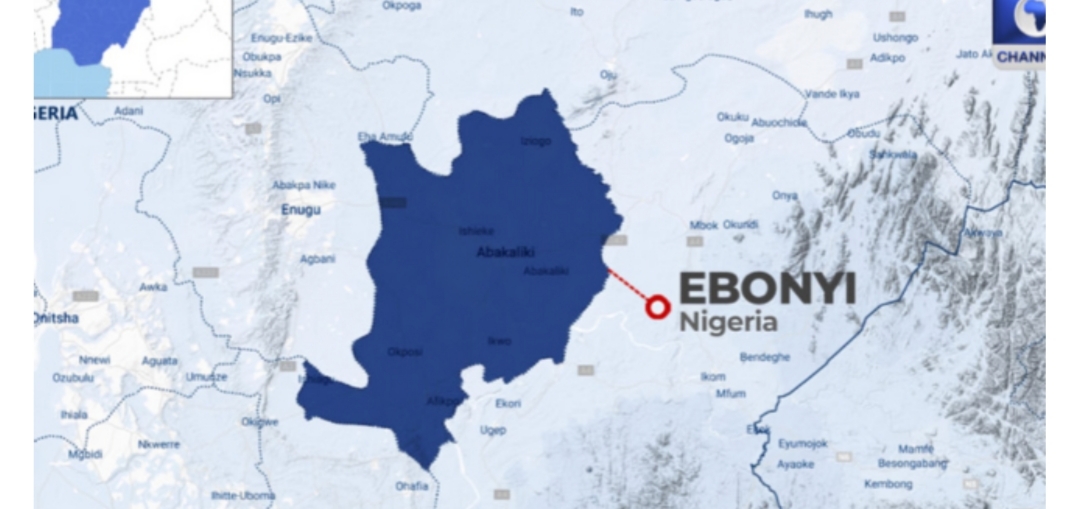
The Ebonyi State Government says it is reviewing 19 major boundary disputes across the state, with some of the cases reportedly dating back to 1912 and 1933, as part of efforts to strengthen peace and resolve longstanding community conflicts.
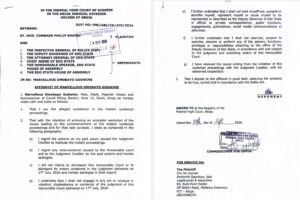
The Commissioner for Border, Peace and Conflict Resolution, Prof. Paul Nwobasi, disclosed this while briefing journalists in Abakaliki on the ministry’s efforts to address boundary disputes, community leadership tussles, land disagreements and issues relating to the enforcement of court judgments.
Nwobasi said the ministry inherited what he described as a complex catalogue of disputes and was deploying dialogue, mediation, fact-finding, community engagement, traditional institutions and technical boundary processes to address them.
According to him, the ministry is currently handling 19 major boundary cases, while also dealing with 10 community election disputes and 29 kindred or family-related cases.
He explained that while dialogue could help prevent immediate hostilities, technical surveying and boundary demarcation were necessary to establish the actual boundaries at the centre of many disputes.
Nwobasi said parties involved in the boundary cases had been directed to maintain the status quo and stay away from contested lands pending final determinations.
The commissioner also highlighted the Amasiri-Edda boundary dispute, following the deadly Okporojo incident of February 6, 2026.
Governor Francis Nwifuru subsequently established the Amasiri-Edda Boundary Adjustment and Demarcation Committee, chaired by Nwobasi, to address the dispute.
The committee submitted an interim report on September 8, 2026, after conducting field surveys and consultations with stakeholders.
Following the report, Governor Nwifuru directed all parties to maintain the status quo and refrain from trespassing on the disputed areas.
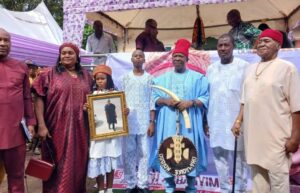
As part of the broader reconciliation efforts, the governor also reinstated the dethroned traditional rulers of Ndukwe and Amasiri, according to the commissioner.
Nwobasi said the state government’s approach was to combine peaceful dialogue with technical processes capable of providing lasting solutions to boundary disagreements.
He also dismissed social media claims alleging that officials of the ministry demand gratification before intervening in community conflicts.
The commissioner described such claims as misinformation, explaining that missions to volatile areas sometimes require security logistics, which he said are coordinated through local government chairmen as part of standard operational arrangements and are not funded by communities involved in the disputes.
He urged members of the public to verify information directly from the ministry and other official sources rather than relying on unverified social media reports.
By Enitan Mudashiru | MUK TV News