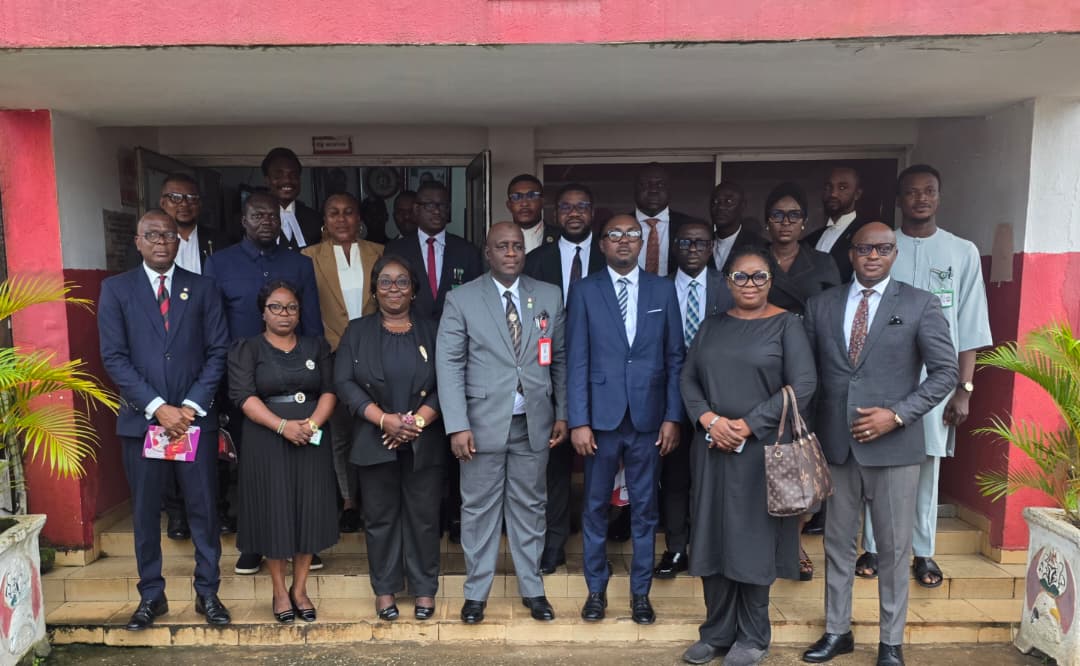
The Nigerian Bar Association (NBA), Benin (Lion) Branch, has held a collaborative engagement with the Economic and Financial Crimes Commission (EFCC), Benin Zonal Directorate, to discuss issues affecting lawyers, suspects, investigations and the administration of criminal justice.
The engagement took place on Tuesday, September 22, 2026, during a courtesy visit by the NBA Benin Branch Executive Committee, led by its Chairman, Omorodion Omoigui, Esq., to the EFCC Benin Zonal Directorate.
The delegation was received by the Deputy Commander of the EFCC, DCE Sa’ad Hanafi Sa’ad, who heads the Benin Zonal Directorate, alongside senior officers of the Commission.
The meeting provided an opportunity for both institutions to discuss areas of mutual professional concern and explore ways of strengthening cooperation between the legal profession and the anti graft agency.
One of the issues raised by the NBA delegation was the practice requiring lawyers to leave their mobile phones at the entrance before accessing the EFCC premises.
Omoigui expressed concern over the practice, particularly its implications for lawyers who may require their devices while carrying out professional duties.
Responding, Sa’ad explained that the restriction was based on existing security directives and was not intended to disrespect lawyers or interfere with their professional responsibilities. He acknowledged the concerns raised and indicated that appropriate exceptions could be considered where necessary.
The Branch Secretary, Bright Iluobe, Esq., also drew attention to a judicial pronouncement concerning restrictions on lawyers’ access to security agencies’ premises with mobile phones, urging the Commission to take the relevant legal position into consideration.
The NBA leadership also raised concerns about the increasing use of plea bargaining in EFCC related cases, urging the Commission to ensure that plea negotiations do not replace thorough investigation and prosecution where available evidence warrants a full trial.
In response, the EFCC Zonal Director explained that plea bargain applications are ordinarily initiated by suspects, sometimes after consultation with their legal representatives. He assured the delegation that the Commission remained committed to conducting investigations professionally and in accordance with the law.
The meeting also addressed allegations of unethical practices and improper professional relationships involving some lawyers and officers within the Directorate.
The Chairman of the Branch’s EFCC/Bar Relations Committee, Abraham Oviawe, Esq., provided further context to concerns brought before the NBA.
EFCC officials requested concrete evidence where allegations of misconduct are made, noting that credible evidence would enable the Commission to investigate and take appropriate action.
The NBA Publicity Secretary, Osayuki King Agbonghae, Esq., acknowledged the importance of evidence in establishing allegations but maintained that complaints raised by members of the legal profession should also be properly examined.
He raised concerns over allegations that some officers may recommend or favour particular lawyers to suspects and proposed a structured engagement mechanism between the EFCC and the NBA’s EFCC/Bar Relations Committee for receiving and addressing complaints.
The EFCC expressed readiness to work with the committee to examine identified concerns and address any substantiated cases of unethical or professional misconduct.
Other issues discussed included the use of fundamental rights applications in ongoing investigations and concerns over bail conditions which, according to the NBA delegation, may sometimes be difficult for suspects to meet.
The EFCC, on its part, appealed for greater cooperation from the legal profession, particularly in balancing the protection of citizens’ rights with the Commission’s responsibility to investigate alleged financial crimes.
Both sides expressed commitment to maintaining an open channel of communication and strengthening professional cooperation in the administration of criminal justice.
The meeting ended with the NBA commending the EFCC for its efforts in combating economic and financial crimes, while reaffirming the Branch’s willingness to sustain constructive engagement with the Commission.
The EFCC Zonal Director also congratulated the new NBA Benin Branch executive and expressed his commitment to maintaining an open-door policy.
The engagement highlights the importance of dialogue between legal practitioners and law enforcement institutions in addressing professional concerns while supporting the effective administration of justice and respect for the rule of law.
By Enitan Mudashiru | MUK TV News