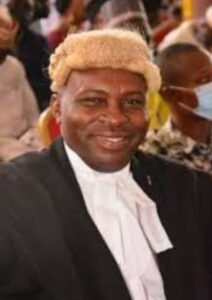
Veteran Nollywood actor Jide Kosoko has defended President Bola Tinubu’s administration despite complaints over the rising cost of living, arguing that the country’s situation is not as bad as some Nigerians portray it.
Kosoko made the remarks during an interview on the Talktobpodcast, hosted by Biola Adebayo and published on Saturday. He questioned the circumstances of some Nigerians who complain about hunger, urging them to compare their present situation with life before Tinubu assumed office.
“When you see people saying, ‘I am hungry, I am hungry,’ go and check the majority of those people saying that before Tinubu came. What were they doing? What were they eating? Every year, things change,” he said.
The actor maintained that public complaints did not fully reflect the country’s situation, insisting that some people were doing well despite the economic difficulties.
“Things are not as bad as some people made us understand,” he said.
Kosoko acknowledged, however, that not everyone was finding life easy, noting that some Nigerians were still struggling financially.
“People make money here and there. Some people might still be unlucky, but that is not to say their own time will not come,” he said.
He was careful to add that his defence of the administration should not be interpreted as a claim that all was well with the economy.
“I’m not saying things are rosy,” he said.
Kosoko urged Nigerians to give Tinubu and his team more time to implement their policies, arguing that the administration should be allowed to complete what it had started.
“Let’s try and allow Mr President and his team to finish what they started,” he said.
The actor also defended the removal of the petrol subsidy, describing the previous arrangement as a financial burden that could create greater problems for the country in the future.
“That’s the subsidy. The money being used to take care of you and me that we consider that subsidy is something that is putting us in problems for tomorrow,” he said.
He argued that money Nigerians might otherwise have saved under the subsidy regime could have been spent on essential needs, including school fees. Kosoko also noted that the student loan scheme had taken over some of the financial responsibilities previously borne by parents.
On the rising cost of food, the actor suggested that Nigerians could manage their expenses by making practical choices about their meals.
“If you eat once a day and good food, you are good to go,” he said.
Kosoko further criticised traders and sellers who increase prices in response to prevailing market trends, arguing that Nigerians also contribute to the hardship they complain about.
“We are enemies of ourselves because when they continue to say, ‘Ah, the price is up,’ then who is hiking it? Who is putting it up? Is it not ourselves?” he asked.
Addressing public demonstrations and criticism of the government, Kosoko warned against destructive protests but acknowledged the importance of speaking out about hardship.
“Destructive protest is not welcome,” he said.
He maintained that criticism remained necessary to help the government understand the areas where Nigerians were experiencing the greatest difficulties.
The actor also dismissed the idea of leaving the country in search of better opportunities, saying his family ties remained a strong reason to stay.
“Even if I am able to japa, don’t I have families, relatives still at home?” he said.
Kosoko concluded by urging Nigerians to stop speaking negatively about the country, expressing confidence in its potential despite the challenges confronting citizens.
“Nigeria is a great country,” he said.