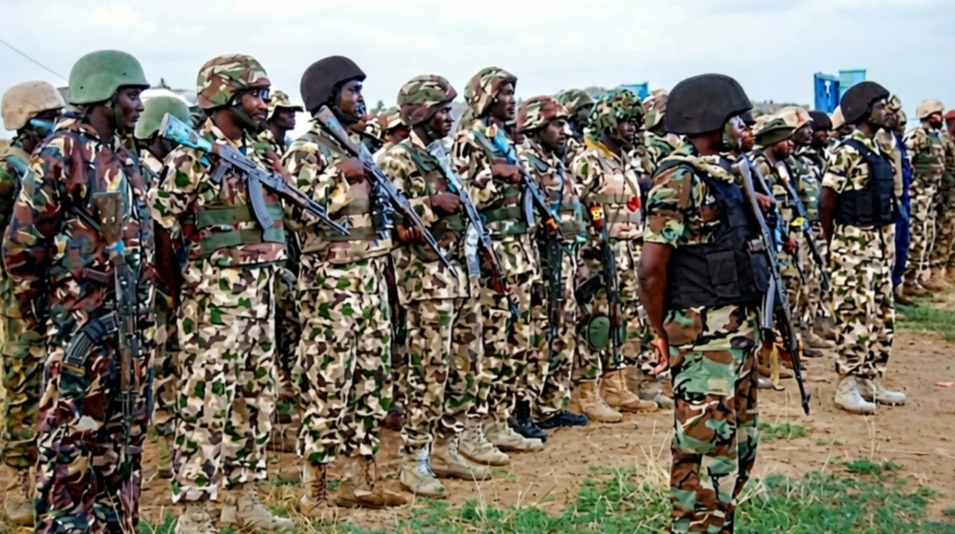
The Federal Government has been commended for increasing the minimum monthly salary of Nigerian soldiers from ₦49,000 to ₦100,000, with calls for the measure to be accompanied by comprehensive reforms in military welfare and operational capacity.
The salary increase, announced by the Minister of Defence, Gen. Christopher Musa (rtd.), has been described as a recognition of the sacrifices and risks undertaken by members of the armed forces, particularly those serving in conflict zones.
However, stakeholders have stressed that improved pay alone cannot address the challenges confronting the military, calling for better accommodation, feeding, healthcare, insurance, operational allowances and educational support for soldiers’ dependants.
The call comes amid persistent security challenges across the country, including terrorism in the North-East, banditry and kidnapping in the North-West, violent criminal activities in parts of the North-Central, separatist violence in the South-East, oil theft in the Niger Delta and piracy along the nation’s maritime corridors.
The Defence Minister had also acknowledged that the military’s budget remains inadequate to meet the demands of the country’s security situation.
Security analysts say military welfare is closely linked to troop morale and operational effectiveness, noting that soldiers who feel valued and adequately supported are more likely to maintain confidence and discipline in difficult operational environments.
Concerns have also been raised over reports and videos circulating on social media alleging poor conditions at some operational bases. While the military has dismissed some of the materials, observers say persistent complaints should prompt greater transparency and investigation where necessary.
Beyond salaries, calls have intensified for increased investment in modern military technology, including drones, satellite imagery, secure communications, electronic surveillance, artificial intelligence-assisted intelligence analysis and precision systems to reduce the exposure of troops to unnecessary risks.
There are also calls for stronger accountability in the management of defence funds to ensure resources allocated to the military translate into improved equipment, logistics and welfare for personnel.
The welfare of families of fallen and wounded soldiers has equally been identified as an important component of military support, with appeals for timely compensation, medical care, rehabilitation and educational assistance for dependants.
Analysts maintain that a well-equipped and properly motivated military is essential to addressing Nigeria’s security challenges, stressing that the recent salary increase should be viewed as the beginning of broader reforms rather than an end in itself.
They urged the Federal Government to build on the salary adjustment by improving the living and working conditions of soldiers, strengthening operational capacity and ensuring transparency in the use of defence resources.
According to the analysts, Nigeria’s security objectives will be difficult to achieve if the welfare and professional needs of the personnel standing on the frontlines are not given sustained priority.