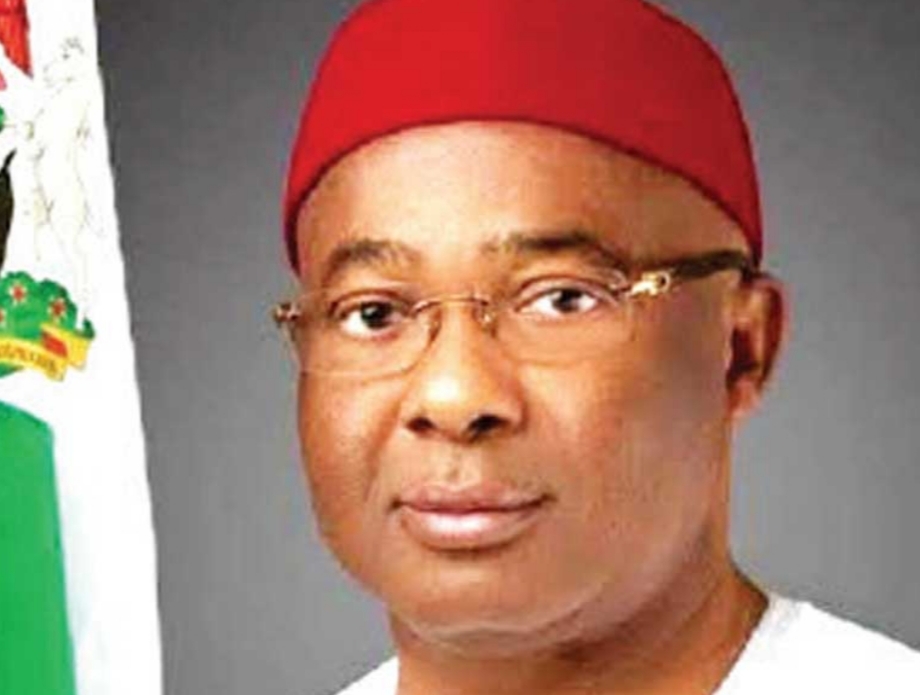
Governor Hope Uzodimma of Imo State and the Minister of Finance and Coordinating Minister of the Economy, Prof. Taiwo Oyedele, have called for stronger fiscal federalism, improved internally generated revenue and economic diversification to strengthen Nigeria’s economy against global shocks.
The duo spoke in Owerri during the 2026 National Council on Finance and Economic Development (NACOFED) Retreat, which is focused on the theme: “Strengthening Fiscal Federalism for Equity, Sustainable Development and Economic Resilience in a Volatile Global Economy.”
The five-day retreat brings together key stakeholders in Nigeria’s financial sector to examine the country’s fiscal structure and develop strategies for sustainable economic growth.
Represented at the event by his Deputy, Lady Chinyere Ekomaru, Governor Uzodimma said states must be empowered to generate more revenue and efficiently manage available resources, stressing that continued dependence on oil revenue was no longer sustainable.
The governor said his administration had digitised revenue collection, blocked leakages and improved Imo’s internally generated revenue as part of efforts to strengthen the state’s financial base.
He added that the state was investing in agriculture, digital economy, tourism, power, education, small and medium-sized enterprises and infrastructure to create jobs and expand economic opportunities, particularly for young people.
Uzodimma urged participants to develop practical measures that would deepen fiscal autonomy, improve revenue generation and promote equity among Nigeria’s federating units.
He also described Imo as an investment destination, citing improved security, political stability and the government’s commitment to partnerships with investors and development partners.
Oyedele: Nigeria Must Move Beyond Allocation Dependence
In his address, Minister of Finance and Coordinating Minister of the Economy, Prof. Taiwo Oyedele, called for a review of Nigeria’s allocation and derivation principles, alongside greater fiscal responsibility, accountability and cooperation among the three tiers of government.
Oyedele said Nigeria must transition from an allocation-dependent economy to one driven by production, investment and job creation.
He noted that recent economic reforms, including the removal of fuel subsidy and the unification of the foreign exchange market, had significantly increased revenues available for distribution through the Federation Account.
According to him, monthly Federation Account allocations, which previously averaged between ₦300 billion and ₦600 billion before 2023, now exceed ₦2 trillion.
He disclosed that the Federation Account Allocation Committee distributed ₦2.8 trillion to the Federal, State and Local Governments in June 2026.
However, the minister cautioned that increased allocations alone could not guarantee development, stressing the need to translate higher revenues into infrastructure, human capital development, productivity and improved public services.
Oyedele urged state governments to strengthen their internally generated revenue, attract investments and create jobs rather than rely excessively on federal allocations.
He also advocated prudent borrowing and transparency in public finance, warning governments against accumulating liabilities without credible repayment plans.
The minister urged participants to ensure that discussions at the retreat remained evidence-based and focused on practical solutions to Nigeria’s changing economic realities.
Earlier, the Permanent Secretary, Special Duties, Federal Ministry of Finance, Mohammed Sanusi, described the retreat as timely, noting that it provided an opportunity for policymakers and other stakeholders to assess the country’s economic reforms and develop strategies for sustainable development.
The retreat attracted commissioners for finance, accountants-general, revenue-generating agencies, development partners and other stakeholders from across the country.