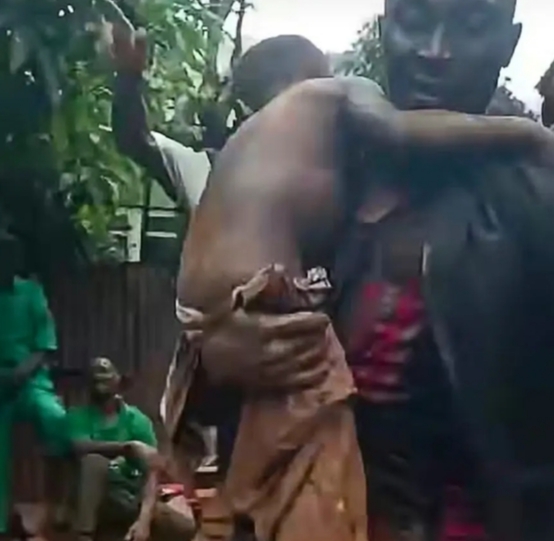
The death of six members of the same family in a building tragedy in Enugu State has thrown relatives and the wider community into mourning, while prompting calls for a comprehensive investigation into the circumstances surrounding the incident.
The tragedy has also renewed concerns among built-environment professionals over building safety, structural integrity, drainage, ground stability and regulatory compliance.
Reports have linked the incident to torrential rainfall, ground movement and the collapse of an elevated water tank. However, professionals have stressed that these reported circumstances should not be regarded as established causes until a competent multidisciplinary investigation determines exactly what happened.
Experts are calling for a forensic investigation by the appropriate authorities, with the affected site preserved to prevent the disturbance or loss of crucial physical evidence.
At the centre of the investigation, they say, should be the question of what failed first.
Investigators would need to determine whether the initial failure involved the ground, foundation, elevated water tank, its supporting system or the building itself, as well as establish what triggered the failure and how the various structural and geotechnical factors may have interacted.
The proposed investigation is expected to examine the design and construction of the affected structure, materials used, workmanship, maintenance history and any subsequent alterations.
It should also establish whether the necessary approvals were obtained and whether regulatory inspections and other statutory requirements were properly carried out.
Professionals have further urged authorities to scientifically assess the possible roles of drainage problems, erosion, slope instability, groundwater conditions and rainfall-induced ground movement.
The accessibility of the area to emergency responders should also be examined to determine whether limitations in emergency access affected rescue efforts.
While the tragedy has generated demands for accountability, experts have cautioned against assigning blame without evidence, stressing that responsibility must be established through a transparent and objective investigation.
Government agencies and regulatory authorities are expected to verify approvals and inspections, enforce applicable building regulations and identify any systemic failures that may have contributed to the incident.
Property owners, clients and developers also have a responsibility to engage competent professionals, obtain the necessary approvals, provide adequate resources for construction and ensure proper maintenance of buildings and infrastructure.
Designers, contractors and other construction professionals are similarly expected to work within their areas of expertise and comply with approved designs, specifications, safety requirements and applicable professional standards.
Structural experts, according to the recommendations, should examine the water tank, its supports and connections, the foundations and the affected building, including its design, loading, materials, workmanship and maintenance history.
Geotechnical experts should assess the soil conditions, bearing capacity, groundwater, drainage, erosion and slope stability, including any evidence of rainfall-induced ground movement.
A proper forensic investigation, professionals say, should identify both the immediate cause and contributing factors and provide recommendations aimed at preventing a recurrence.
Where negligence, professional misconduct or regulatory failures are established, appropriate disciplinary, civil or criminal processes should follow in accordance with the law.
Beyond the immediate investigation, experts are urging authorities to inspect similar elevated water tanks and potentially vulnerable buildings, conduct targeted structural and geotechnical assessments, and review emergency access routes in vulnerable communities.
In the longer term, they recommend stronger development control, professional supervision, periodic building inspections and maintenance, alongside improved drainage and erosion management, risk mapping, early-warning systems and community emergency preparedness.
For the bereaved family, the loss of six loved ones remains an irreversible tragedy. For authorities and built-environment professionals, the incident presents an urgent responsibility to establish the facts, address any failures identified and ensure that lessons from the tragedy translate into stronger measures to protect lives.
The central questions remain: What failed first? Why did it fail? And how did that failure lead to the loss of six lives?
Finding credible answers to those questions, experts say, will be essential not only for accountability but also for preventing similar tragedies in the future.
By Enitan Mudashiru | MUK TV News