The United Nations has warned that prolonged disruptions to fertiliser shipments through the Strait of Hormuz could trigger a food-security crisis in parts of Africa and Asia if the United States and Iran fail to reach an agreement within weeks.
Jorge Moreira da Silva, the UN under-secretary-general overseeing a proposed arrangement to facilitate fertiliser shipments, said the mechanism could become operational within seven to 10 days of an agreement between Washington and Tehran.
Speaking on Wednesday, October 14, on the sidelines of the International Monetary Fund and World Bank annual meetings in Bangkok, Moreira da Silva stressed the urgency of resolving the impasse, warning that delays could cause farmers to miss critical planting seasons.
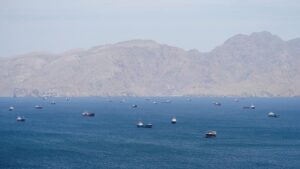
The United Nations established a task force in March to develop a framework for restoring the movement of fertilisers through the strategic waterway, which connects the Persian Gulf to the Gulf of Oman. The initiative aims to facilitate essential agricultural shipments without requiring Washington and Tehran to resolve their wider disputes first.
Before the conflict began in February, the Strait of Hormuz handled approximately one-third of globally traded urea, a widely used nitrogen fertiliser, and nearly half of seaborne sulphur, a key raw material for phosphate fertiliser production.
Under the proposed arrangement, a coordination centre in Oman would register vessels and organise their passage through the strait. UN monitors would work with local authorities to verify cargoes and track ships during transit. The plan envisages allowing approximately five vessels through the waterway daily to help meet urgent fertiliser requirements.
However, diplomatic disagreements between the United States and Iran have stalled implementation. Negotiations have been complicated by disputes over Iran’s nuclear programme, the wider conflict and a US naval blockade of Iranian ports.
The disruption has already affected international fertiliser markets. A July analysis by the World Trade Organization found that shipments of fertiliser-related products through the Strait of Hormuz had fallen to near zero following the outbreak of hostilities.
According to the WTO analysis, urea prices climbed from approximately $400 per metric tonne before the conflict to more than $850 in April before declining to around $453 in June. Despite the subsequent reduction, uncertainty over supply recovery continues to raise concerns about affordability and availability.
The WTO also reported that Gulf economies accounted for 24.8 per cent of global nitrogenous fertiliser exports and 11.4 per cent of phosphatic fertiliser exports in 2024. Replacing these supplies could prove difficult because alternative sources may involve higher transportation costs and logistical challenges.
The UN warning highlights the risk that fertiliser shortages could extend beyond agricultural input markets into food production. Farmers unable to secure adequate supplies before planting may reduce fertiliser application, potentially lowering crop yields and tightening food supplies in subsequent harvests.
Higher input costs could also squeeze farmers’ profit margins and contribute to rising food prices, particularly in countries that depend heavily on imported agricultural supplies.
Nigeria is among the countries that could face pressure if international fertiliser prices rise or supply constraints persist. Farmers who rely on purchased inputs could experience higher production costs, potentially affecting agricultural output and food affordability.
However, the extent of any impact on Nigeria will depend on domestic fertiliser stocks, import arrangements, distribution networks and the availability of alternative supplies. The UN warning does not establish a specific forecast for Nigerian food prices.
The disruption is also adding to broader concerns about the resilience of global supply chains, as insecurity in other strategic shipping corridors, including the Red Sea and the Black Sea, continues to complicate international trade.
The United Nations is urging Washington and Tehran to reach an agreement before farmers lose crucial planting opportunities. The outcome of the negotiations could determine whether the disruption remains largely a shipping and fertiliser supply problem or develops into a wider agricultural and food-security crisis across vulnerable economies in Africa and Asia.