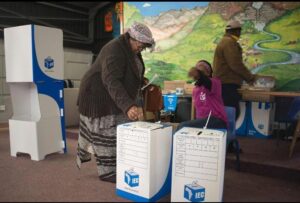
South Africans have begun voting in local government elections that are expected to test the popularity of the African National Congress (ANC), the political party that led the country out of apartheid and has governed nationally since 1994.
The elections are taking place amid growing public dissatisfaction with the delivery of essential services, including water supply, electricity, sanitation and waste management.
According to South Africa’s Electoral Commission, approximately 29.2 million voters are registered to participate in the elections across 23,696 voting stations nationwide. About 188,000 election officials have been deployed to oversee the voting process.
The elections will determine representatives for municipal councils responsible for managing local infrastructure, public services and community development.
Service delivery has emerged as one of the major issues influencing voters. Residents in several communities have complained about water shortages, electricity disruptions, damaged roads, sewage problems and the failure of local authorities to collect rubbish regularly.
These concerns have increased pressure on municipal governments and political parties to demonstrate their ability to improve living conditions.
The ANC is facing strong competition from opposition parties following its declining electoral support in recent years. In the 2024 national elections, the party lost its parliamentary majority for the first time since the end of apartheid, leading to the formation of a government of national unity.
Opposition parties, including the Democratic Alliance and the uMkhonto weSizwe Party, are seeking to strengthen their positions in local government and gain greater influence over municipal administration.
Political analysts are closely monitoring the elections because the results could provide an indication of the level of public confidence in the ANC and the country’s changing political landscape.
The outcome is also expected to influence how municipalities manage their budgets, develop infrastructure and respond to the needs of residents over the next five years.
The elections highlight the importance of local government in addressing everyday challenges and maintaining public confidence in democratic institutions.