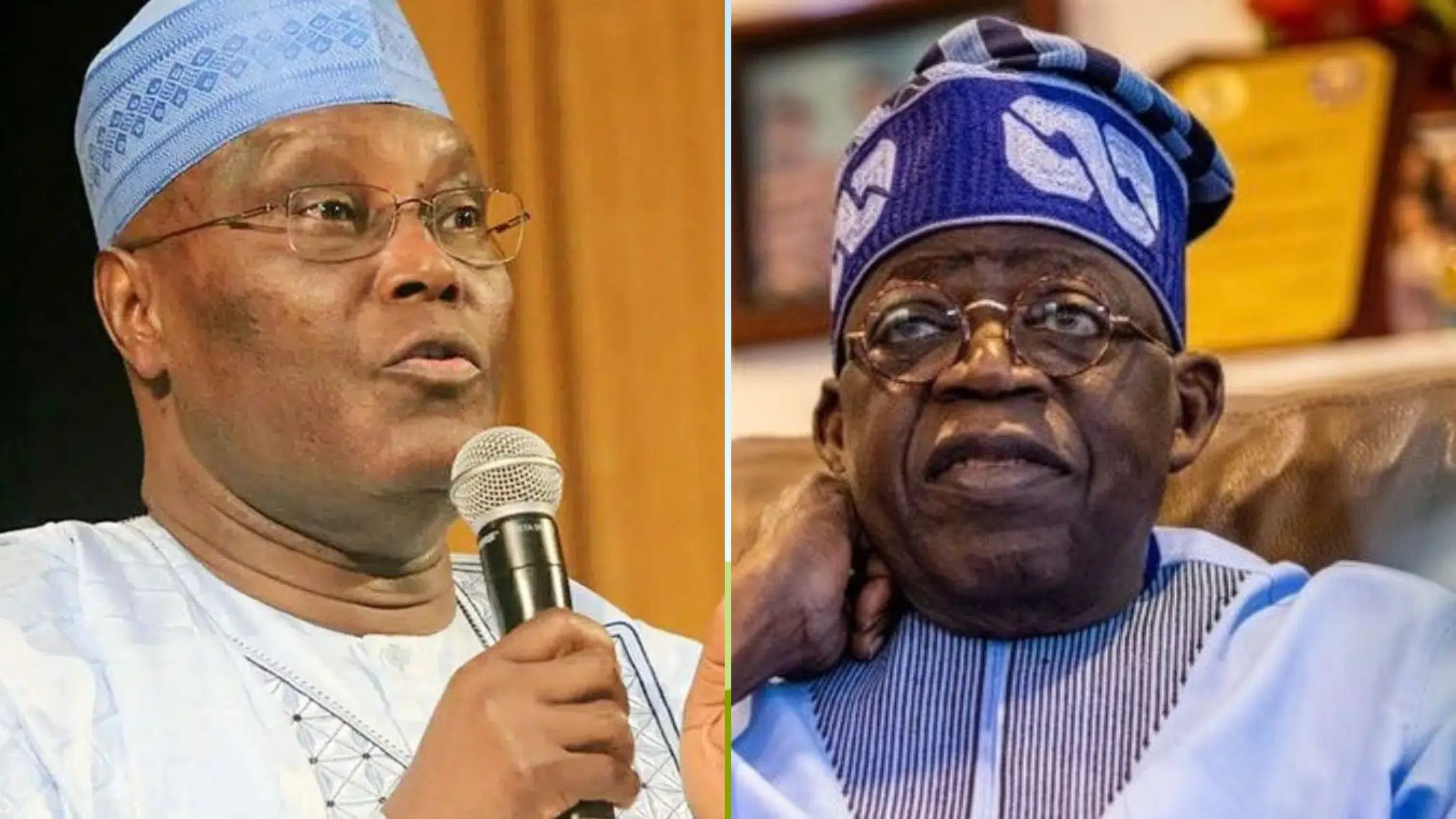
ADC presidential candidate Atiku Abubakar has challenged the United States Federal Bureau of Investigation (FBI) to release all legally disclosable records relating to President Bola Tinubu, arguing that claims of potential danger to lives cannot justify keeping the information from the public.
The demand followed an FBI application asking a US district court in Columbia for permission to submit confidential explanations, ex parte and in camera, on why some investigative records concerning allegations of drug trafficking against Tinubu should remain undisclosed.
In a statement issued on Saturday by his Senior Special Assistant on Public Communication, Phrank Shaibu, Atiku questioned the FBI’s justification for withholding the records, linking the agency’s argument to the economic hardship Nigerians are facing.
“The FBI says disclosure could endanger lives. Which lives? Nigerians are already dying,” the statement read.
Atiku blamed the removal of fuel subsidy for worsening the economic difficulties confronting Nigerians, arguing that the policy had affected transportation, food prices, production and employment.
“Fuel affects transportation. Transportation affects food prices. Energy affects production. Production affects jobs. All of them determine whether an ordinary Nigerian family can survive until the end of the month,” he said.
The former vice president also reiterated his pledge to reverse the subsidy removal if elected, promising what he described as a more accountable system.
On the FBI records, Atiku said his demand was not for sensitive intelligence to be exposed but for information that could legally be made public to be released.
“Protect your agents. Protect your sources. Protect legitimate investigative methods. Redact whatever American law genuinely requires you to redact. But do not stretch those protections until they become a bulletproof vest for Tinubu,” he said.
Atiku further argued that his demand was not an attempt to interfere in Nigeria’s domestic politics but a call for transparency concerning a leader whose decisions affect millions of Nigerians.
“Our demand of American law enforcement is not a call to interfere in Nigeria’s politics. It is a humanitarian and democratic appeal rooted in the principle that people have a right to information legitimately available about those who exercise enormous power over their lives.
“Protect your investigators. Protect your sources. Protect your methods. But do not protect the truth from Nigerians. Our people are already paying for bad governance with their lives”, he said.